
Solar for Educational Institutions: Lowering Energy Costs While Leading in Sustainability

Providing high-quality learning environments while managing tight budgets and demonstrating social responsibility. Solar energy offers a solution that addresses both. By generating clean, renewable power on-site, schools can lower energy costs, reduce carbon emissions, and provide students with a tangible example of sustainability in action – without the upfront capital often required.
Educational institutions face a unique challenge:
4 Reasons Why Solar Makes Sense for Schools
For educational institutions, solar energy delivers numerous advantages, most notably:

01
Lower Energy Costs
Producing your own solar energy reduces monthly electricity bills, freeing up funds that schools can redirect to educational programs, facility improvements, or technology upgrades.
By lowering operating expenses, solar allows administrators to invest more in the student experience while protecting against rising energy prices.
02
Sustainability Leadership
Installing solar demonstrates a visible commitment to ESG principles. Schools that adopt renewable energy become leaders in sustainability, showing students, staff, parents, and donors that environmental responsibility is a core value.
This leadership can inspire the school community, attract families and educators who prioritize sustainability, and set an example for other institutions to follow.

03
Low/No Upfront Capital Required
Many schools operate with limited budgets, making large capital investments challenging. Power Purchase Agreements (PPAs) provide a solution by allowing schools to implement solar without the burden of upfront costs. The system provider funds the development and construction of the solar installation, and the school simply pays for the electricity the system produces. This approach provides predictable energy costs, immediate savings, and measurable reductions in carbon emissions, all without tying up school funds.

04
Educational Opportunities
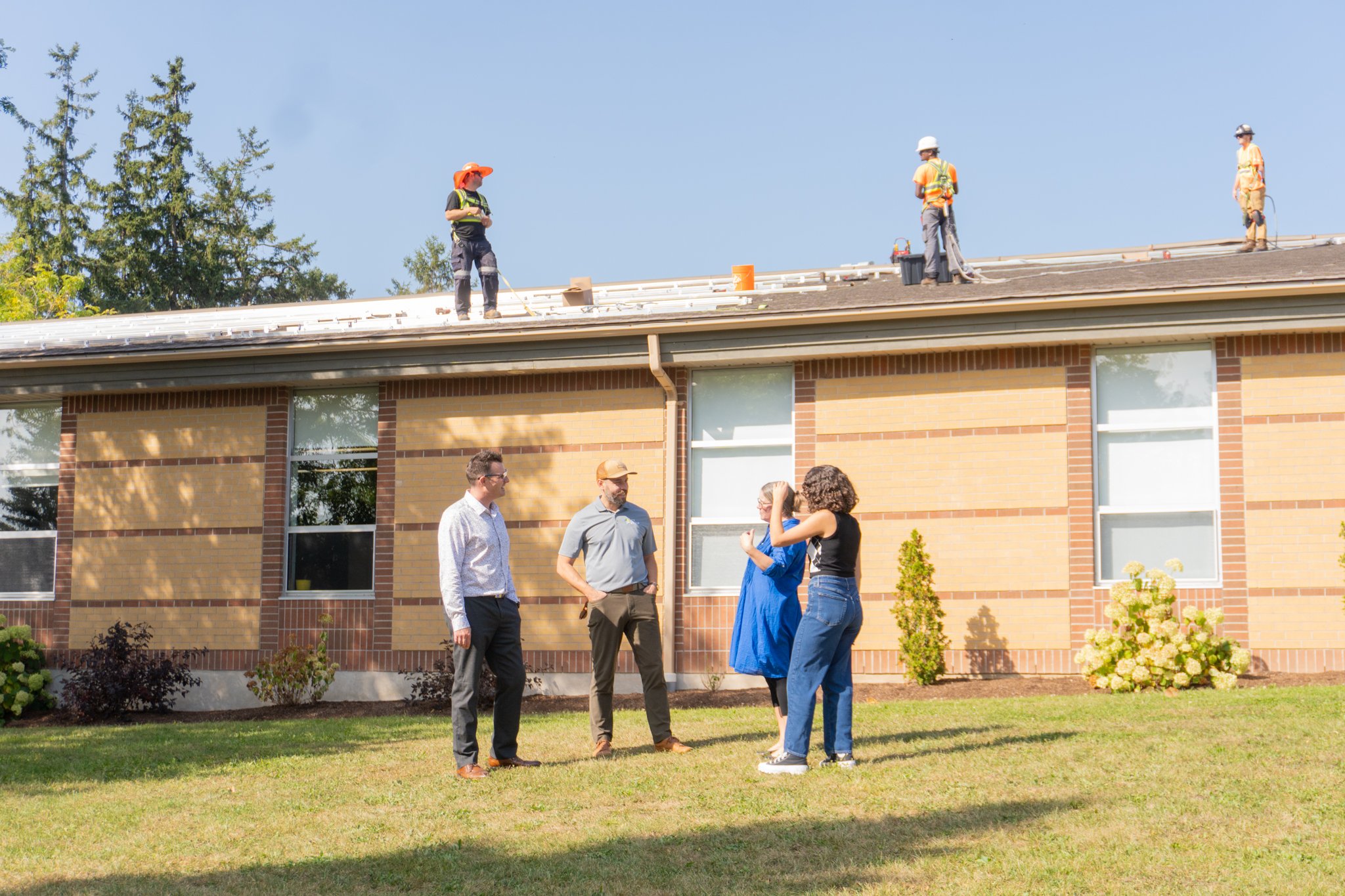
Beyond the financial and environmental benefits, solar installations create a real-world learning environment. Students can engage with advanced solar technology, study how energy is generated and used, and observe the impact of decarbonization first-hand. Solar turns the school building itself into a teaching tool, reinforcing lessons in science, technology, and environmental responsibility.
By combining cost savings, sustainability leadership, flexible financing, and educational benefits, solar becomes a strategic choice for schools looking to lower expenses while preparing students for a low-carbon future.
A Case Study in Solar Leadership
Rockway Mennonite Collegiate
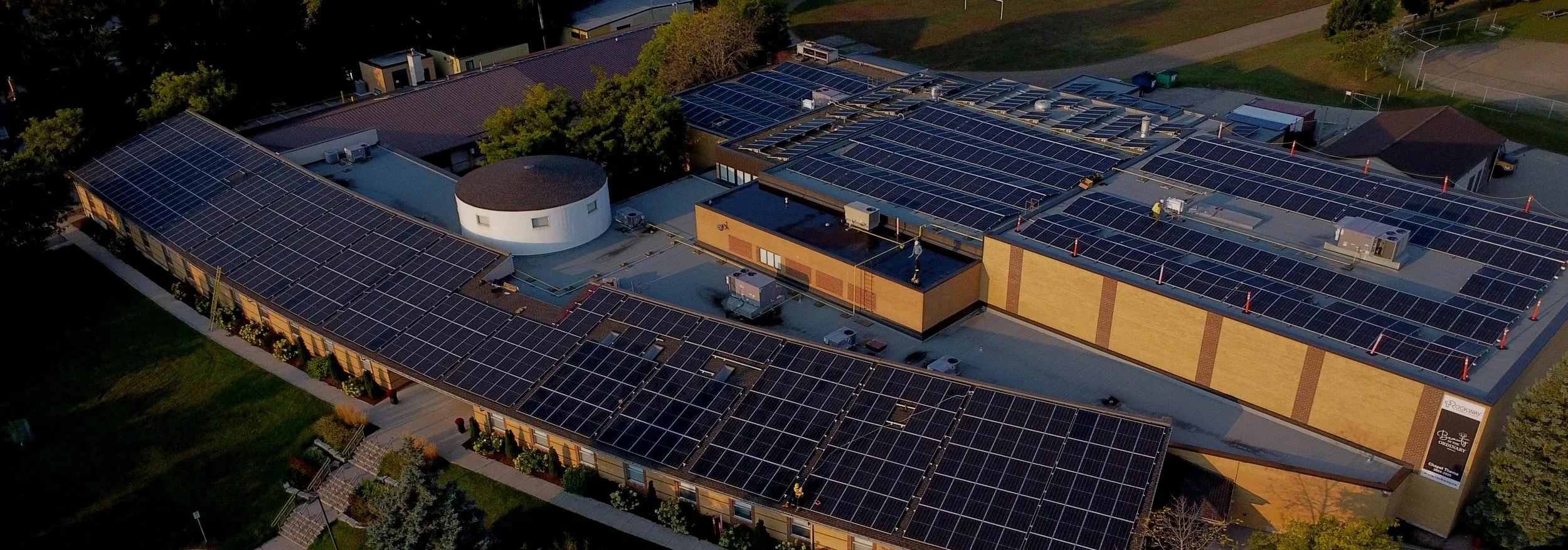
Rockway Mennonite Collegiate in Kitchener, Ontario, partnered with VCT Group to install a 502 kW DC ballasted rooftop solar system. The project includes over 850 solar panels designed to generate more than 393,230 kWh annually – enough to meet nearly 100% of the school’s electricity needs.
Over
850
Solar Panels
Meets Nearly
100%
of Electricity Needs
More Than
393,230
kWh Generated Annually
A PPA allows Rockway to access reliable, emissions-free energy without upfront capital investment. This approach is particularly valuable for schools, which often face tight budget constraints. By leveraging a PPA, Rockway benefits from immediate energy savings while avoiding the financial burden of building and maintaining the system themselves.
The project was structured as a Power Purchase Agreement (PPA)
Beyond the financial benefits, the solar installation has positioned Rockway as a sustainability leader. Students and staff can see firsthand how solar power works, turning the roof into a learning opportunity that reinforces lessons on renewable energy, environmental stewardship, and decarbonization.
Solar as a Learning Opportunity

Solar installations in schools do more than reduce costs
They provide a real-world example of decarbonization in action. Students can engage with this technology, learn how solar panels generate electricity, how energy usage aligns with environmental impact, and why decarbonization is a critical part of modern sustainability efforts.

Real world examples of ESG concepts
Integrating solar into a curriculum helps schools connect ESG concepts to practical outcomes. This hands-on approach reinforces the institution’s commitment to sustainability while teaching students valuable lessons about energy, environmental responsibility, and corporate social responsibility.

Solar is more than an energy solution for schools
It’s a tool for education, leadership, and measurable sustainability impact. Projects like Rockway Mennonite Collegiate and Hillfield Strathallen College demonstrate that with the right approach, schools can reduce costs, provide students with real-world learning opportunities, and strengthen their ESG commitments.

By partnering with VCT Group, educational institutions can implement solar solutions that are financially viable, environmentally impactful, and educationally enriching. Solar helps schools lower energy costs while leading in sustainability, turning rooftops into both a source of clean energy and a living classroom for decarbonization in action.