
How Does Solar Work?

As long as we’ve been in the solar business, we keep getting asked one question: how do solar cells work? Solar cells are energy converters that absorb sunlight and transform it into electrical energy. By understanding the photovoltaic effect, solar cell design, and the role of doped silicon layers, we can see how sunlight becomes usable power — efficiently and sustainably.
From Sunlight to Electricity: Understanding How Solar Cells Work
The Photovoltaic Effect
Light Energy Turns into Electricity
All atoms are made of three types of sub-atomic particles:
Protons
Neutrons
Electrons
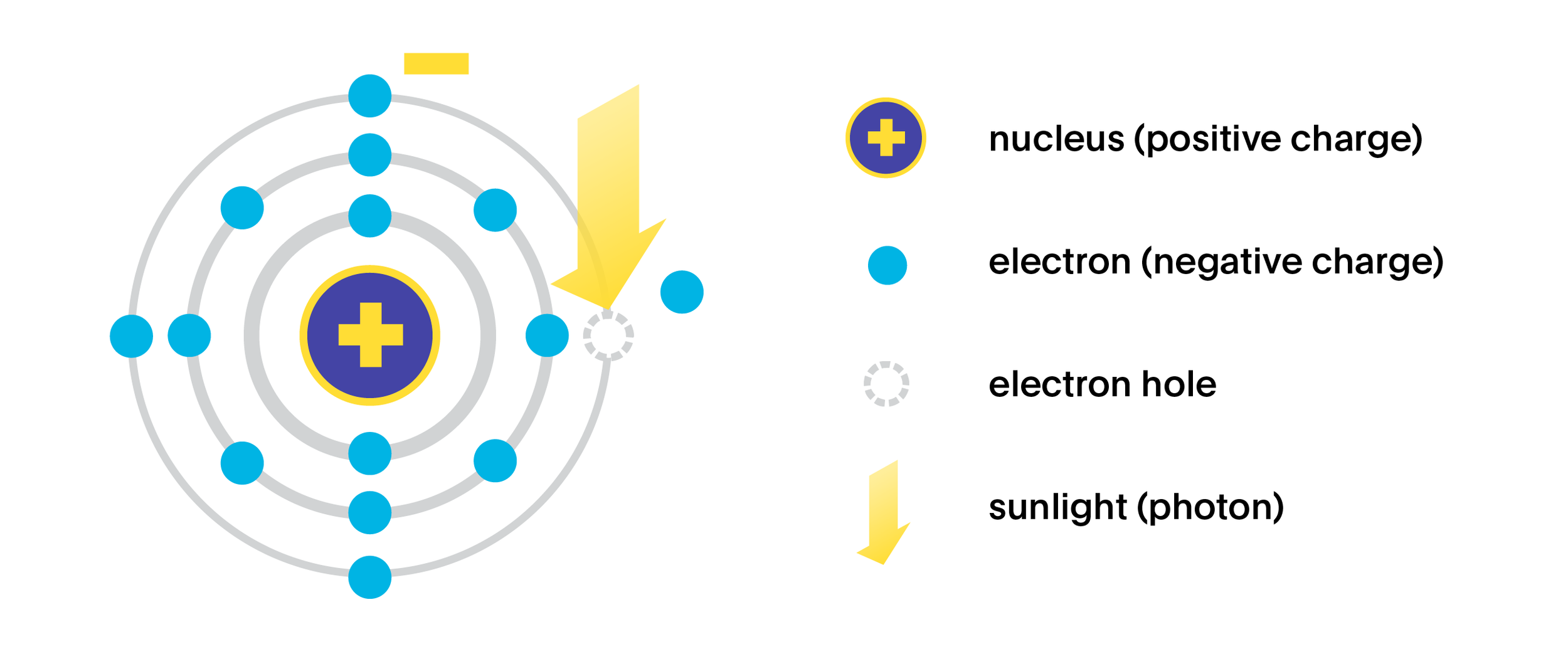
Protons and neutrons are found in the nucleus at the center of the atom, forming the bulk of its mass. Electrons are much lighter and normally orbit the nucleus. However, if an electron absorbs enough energy, it can get so “excited” that it breaks free from its atom, leaving behind an electron hole.
In some materials, the energy from light is enough to excite the atoms’ outer electrons to escape. This process is called the photovoltaic effect. Once the electrons are knocked loose, they are free to flow through the material. When many electrons flow together, that’s electricity.
One material in which this happens efficiently is silicon. Silicon is commonly found in sand or quartz. It’s cheap and abundant, and most solar cells are made from it (solar cells can also be made from other materials, but for this article we’ll stick with silicon).
Atoms always try to balance their electric charge to become neutral. If they have an electron hole, they will readily absorb any free electron to fill it. For free electrons to be useful and generate an electric current, we must separate them from the positively charged holes they leave behind. This charge separation is at the heart of how solar cells work.
Image suggestion: Schematic diagram of a silicon atom showing electrons, nucleus, and orbitals. Include a photon energizing an electron to illustrate the photovoltaic effect.
Solar Cell Design
The Solar Cell Sandwich
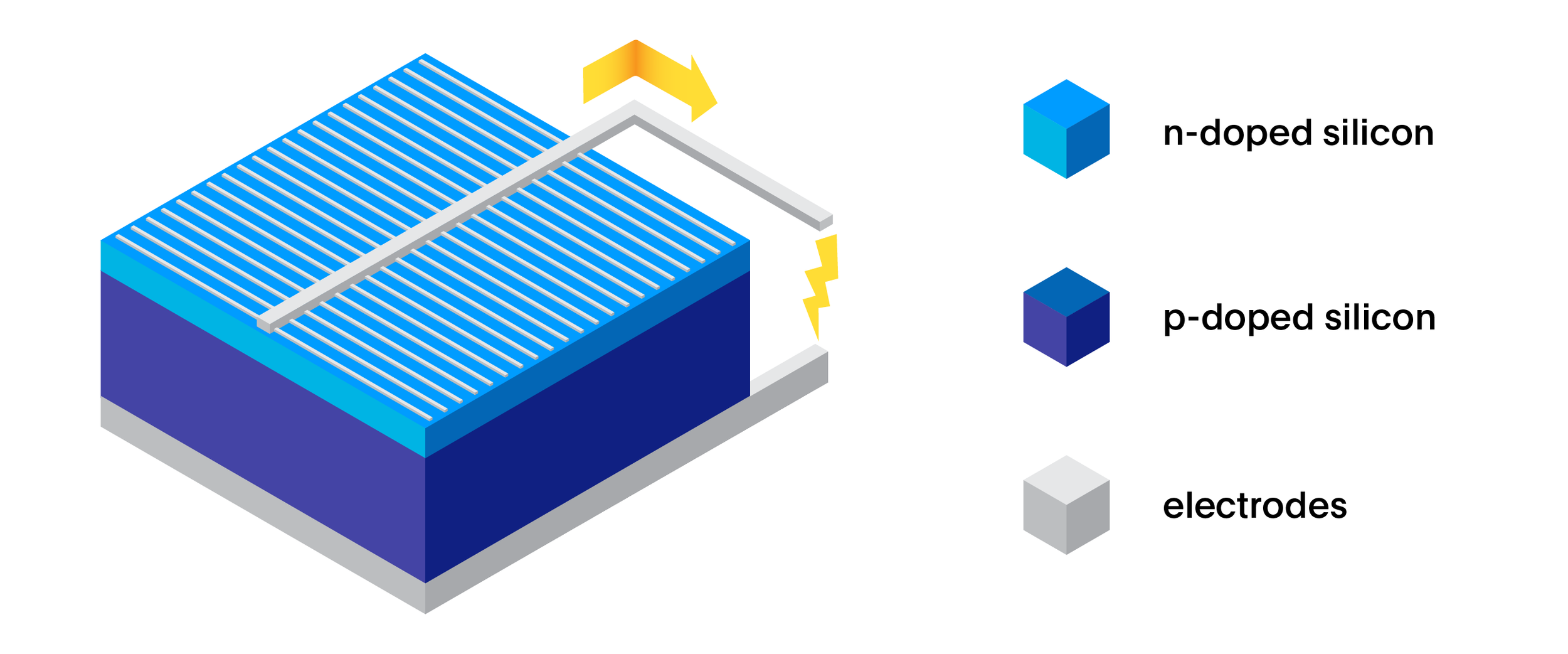
A solar cell looks like a sandwich. On the top is a fine web of metal wires, in the middle a layer of silicon (often crystalline), and at the bottom another metal layer or wire mesh. The metal layers act as electrodes, with the top being negative and the bottom positive.
The silicon layer isn’t pure—it contains impurities added intentionally. The top and bottom layers have different impurities, which allow the solar cell to separate charges efficiently.
The Power of Doping
How Impurities Create Electricity Flow
Adding impurities to silicon during manufacturing is called doping. There are two types:
N-type: Adding arsenic or phosphorus
P-type: Adding boron or gallium
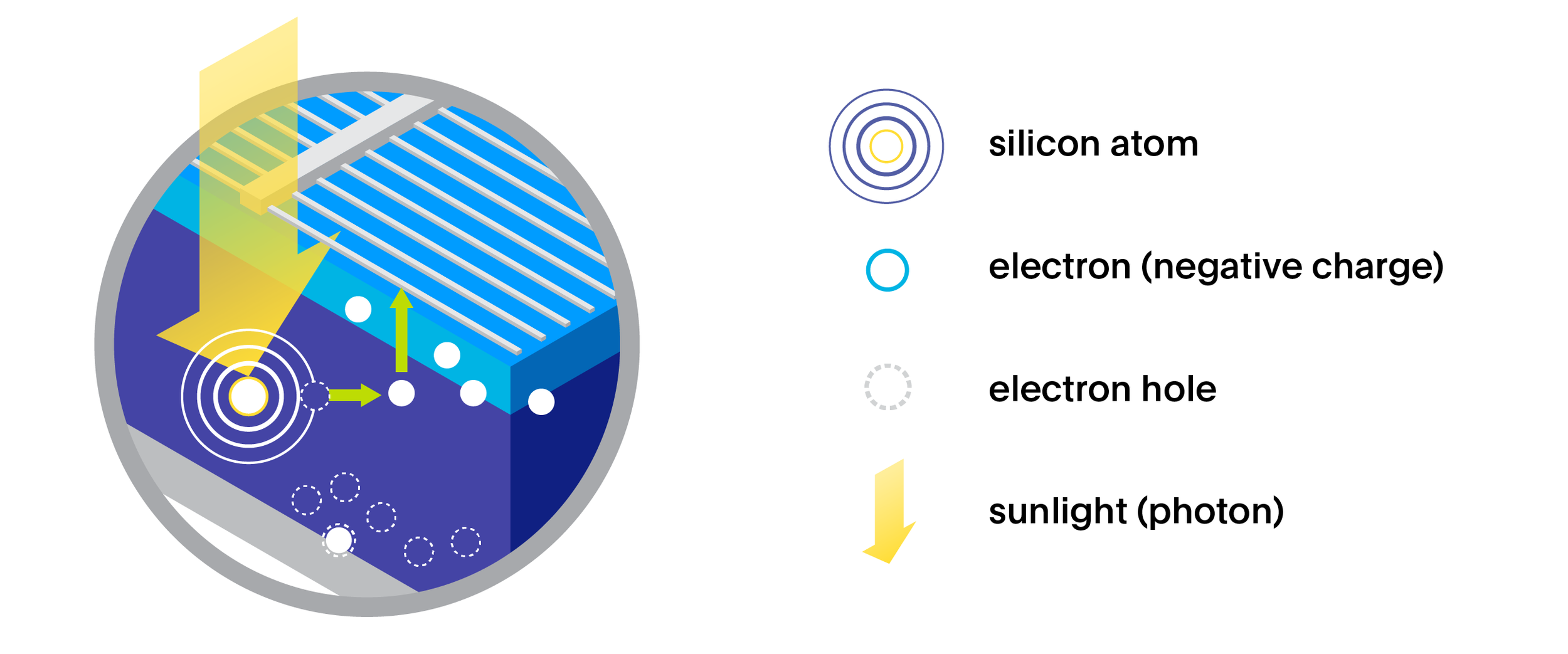
The n-doped and p-doped layers create a boundary that only allows electrons to flow in one direction. When sunlight hits the solar cell, it energizes electrons, which move to the n-doped layer, while holes migrate to the p-doped layer.
Even away from the boundary, electrons and holes naturally diffuse from high to low concentrations, eventually reaching the boundary to be sorted.
Electrons gathered on the top surface are collected by electrodes, flowing out of the solar cell to create electric current, while returning electrons combine with holes at the bottom, completing the circuit.

Electricity in a Nutshell
Electricity = flow of electrons
Atoms like silicon contain electrons
Sunlight excites electrons to leave atoms
Carefully doped silicon separates electrons and holes
Electrons flow out of the solar cell, generating electric current
How Solar Cells Work for You
Scalable, Efficient, and Affordable
The modular nature of solar cells allows for scalable applications, from residential rooftops to industrial installations. Solar panels are now cost-effective and efficient. On average, sunlight delivers 1000 Watts per square meter, and solar panels convert about 20% of that into electricity.
In Ontario, solar is mostly implemented through net-metering, which calculates the difference between power generated and consumed. Surplus energy is fed into the grid, earning credits for future use, meaning no battery is required.
Solar also provides a visible commitment to sustainability, building trust with customers and stakeholders.
How Solar Cells Work for Everyone
Power for People, Planet, and Business
Climate change is already impacting our world. Solar provides adaptability and resilience by creating distributed renewable power that is less vulnerable to interruptions.
While challenges remain, global adoption and investment in clean technologies are key. VCT Group works with businesses to incorporate solar solutions that benefit operations, the environment, and the wider community.
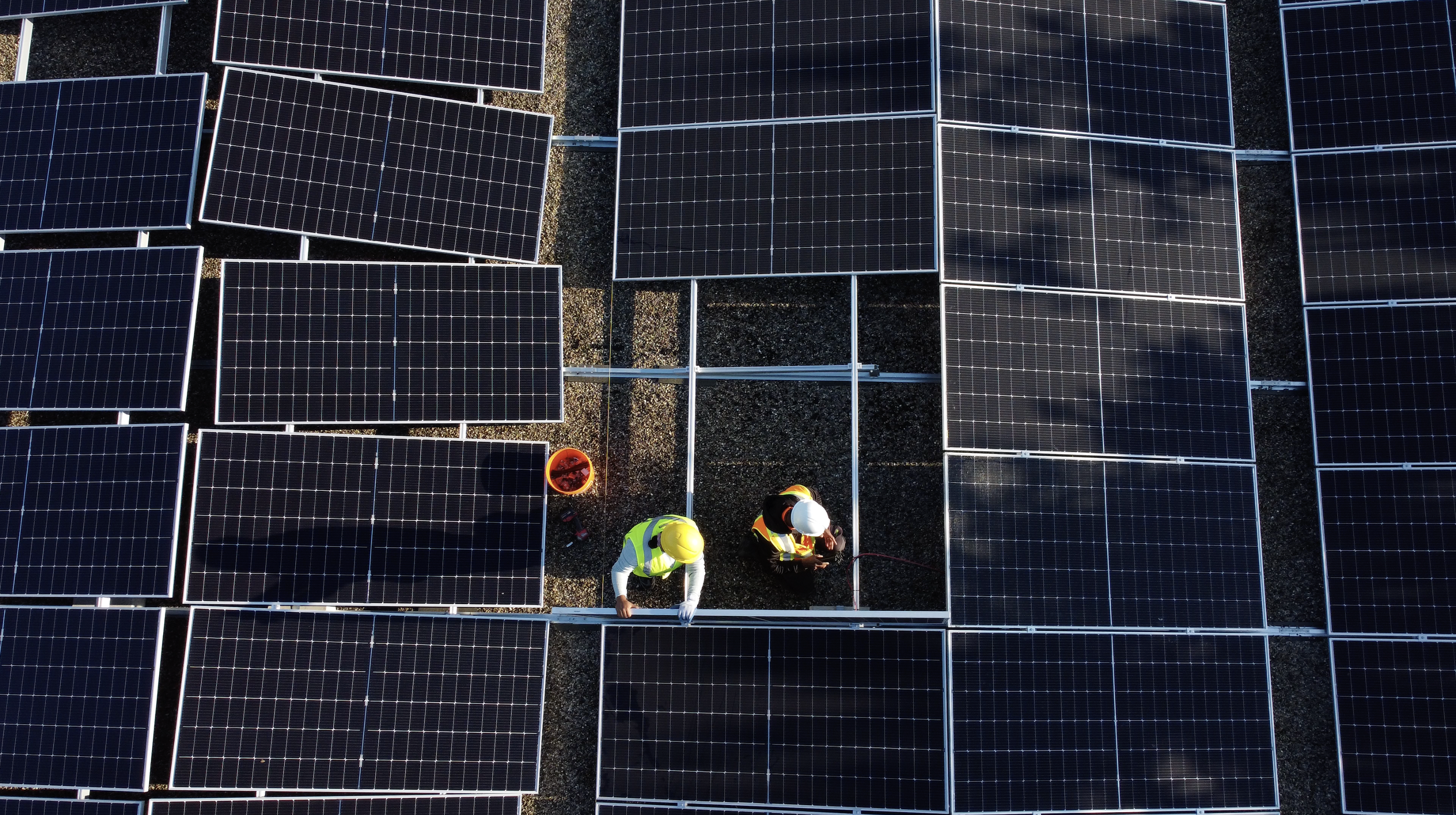
Solar power is clean, reliable, and scalable. It reduces environmental impact, saves on energy costs, and demonstrates your commitment to a sustainable future.
Discover how you can harness the power of the sun—partner with VCT Group today to start generating clean, reliable energy.