
When considering an investment in commercial solar, one of the biggest questions is how to ensure your panels operate efficiently and deliver the best possible return on your investment. Two commercial solar proposals can land at a similar price point and still deliver very different results over the life of the system. One of the biggest, and least understood, reasons why is panel efficiency and the design decisions built around it.
Here's what panel efficiency actually means, why it matters for commercial properties, and what to understand before making an investment.
What Panel Efficiency Actually Means (and What It Doesn't)
Panel efficiency is the percentage of sunlight hitting a panel that gets converted into usable electricity. Higher efficiency means more electricity generated from the same amount of sunlight and the same size of panel. What it doesn't mean is that the highest-efficiency panel available is automatically the right choice.
Efficiency is one input into a larger equation that includes available space, budget, and the specific goals of the project. A slightly lower-efficiency panel can be the better financial decision if space isn't the limiting factor. The right question isn't "what's the most efficient panel on the market", it's "what's the most efficient system for this specific property."
Why Panel Efficiency Matters for Commercial Roofs
For many commercial and industrial properties, roof space is a fixed, limited asset. Unlike a residential ground-mount system with room to expand, a commercial roof has a hard boundary. Panel efficiency determines how much energy you can generate from a given amount of roof space.
That has a direct line to return on investment: more output per square foot of available roof means a better return on a limited space asset. For properties where roof space is committed to other uses, leased, or otherwise limited, this is even more important, since every square foot of usable space needs to work harder.
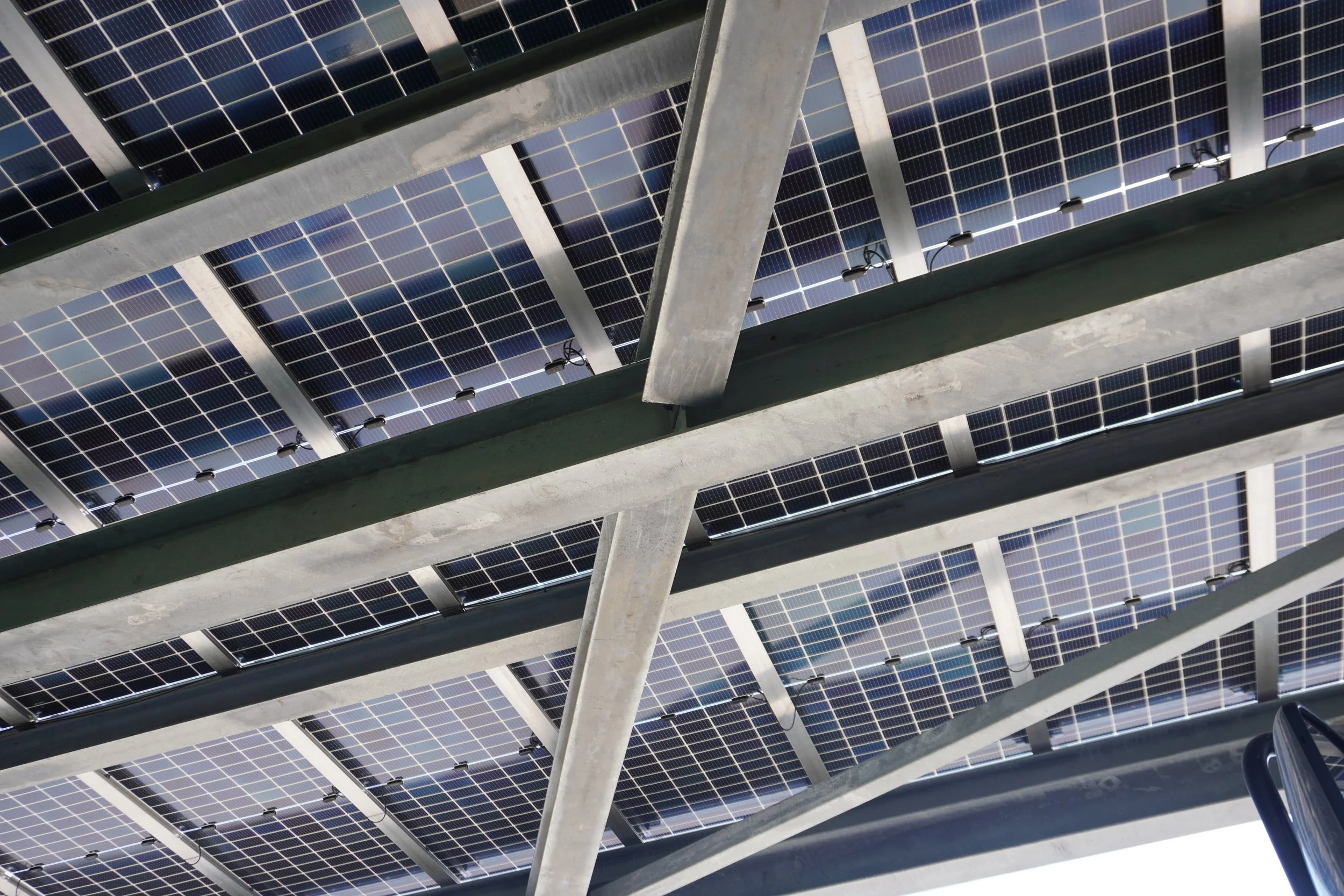
What Actually Drives Efficiency in a Commercial System
Several factors determine how much energy a commercial solar system actually produces:
Panel technology
Panel efficiency: Monocrystalline panels are among the most efficient options available, but higher efficiency often comes with higher costs and supply considerations.
Panel degradation: Solar panels gradually lose output over time, so it’s important to consider how much energy they will produce years into the system’s life.
System design
Orientation and tilt: The position and angle of the panels affect how much sunlight they receive.
Shading: Nearby obstructions, such as buildings, trees, rooftop equipment, can reduce output, regardless of how high-efficiency the panels are.
Inverters and string design: These components affect how efficiently the system converts and delivers the electricity it generates.
Overall system layout: Two systems using the same panels can produce very different amounts of energy depending on how the system is designed.
Panel efficiency matters, but good system design is just as important to maximizing real-world energy production.
What to Look for in a Commercial Solar Proposal
A thorough commercial solar proposal should give you clarity on more than just panel specs. A few things worth understanding before moving forward with any project:
Expected output relative to your available space, not just total system size. This is what actually determines whether the design is making the most of your roof or land.
Whether a shading analysis was performed for your specific site, accounting for nearby structures, rooftop equipment, and seasonal sun angles.
Degradation rate and warranty terms, since these affect how much the system will still be producing a decade or more into its life.
What ongoing monitoring is included, so you have visibility into actual system performance over time rather than an assumption based on initial projections.
How Efficiency Affects Your Payback Period
In summary, how long the system takes to pay for itself isn’t just determined by the panels you use. A well-designed, appropriately efficient system generates more usable electricity from the same investment, which shortens the payback period.
A solar array system designed with less attention to shading, orientation, or degradation can underperform and take longer to see a return, even if the upfront cost looks comparable. That’s why efficiency needs to be a real consideration during the decision-making process instead of a passing mention in a sales conversation.
Want to know what your property's roof or land could actually produce?
We'll evaluate your specific space and deliver a thoughtfully-designed system concept, before you commit to anything.