
Solar for Wineries and Food Processing Facilities in Ontario
If you own a winery or food processing operation in Ontario, you know that the biggest line item on the balance sheet is energy costs.
These facilities rely on energy-intensive equipment around the clock. Refrigeration systems, climate-controlled fermentation rooms, packaging lines, cold storage vaults, and heavy-duty HVAC infrastructure all require a constant and reliable energy source. They can't just turn things off to save money.
This makes rising electricity rates an uncontrollable variable in nearly every winery and food processing facility in Ontario. It’s something that directly impacts the bottom line, but remains out of your control.
Solar energy doesn't eliminate electricity costs entirely, but for the right facilities, it can meaningfully offset them, stabilize operating expenses over time, and deliver long-term financial returns.
Why Energy Costs Are So High in Wineries and Food Processing
Compared to a typical commercial building, where occupancy and loads fluctuate, wineries and food processing plants have consistent daytime energy demand.
That costly energy consumption comes from refrigeration systems that maintain cold storage temperatures, packaging lines running through the day, HVAC systems, and fermentation temperature control. They operate from morning through late afternoon, with energy usage dropping slightly during the evenings.
Why Solar Works So Well for Wineries and Food Processing
Solar generation peaks during the same hours that wineries and food processing plants need it most, around 8am to 5pm. This makes wineries and food processing plants particularly well-suited to solar energy generation.
Because of this, many wineries and food processing facilities can support a higher rate of solar self-consumption, especially with seasonal production peaks. Summer harvest and processing runs, peak cold storage demand, and higher cooling loads all arrive when solar output is at its highest.
There are several factors that make solar a great choice for food and drink manufacturing.
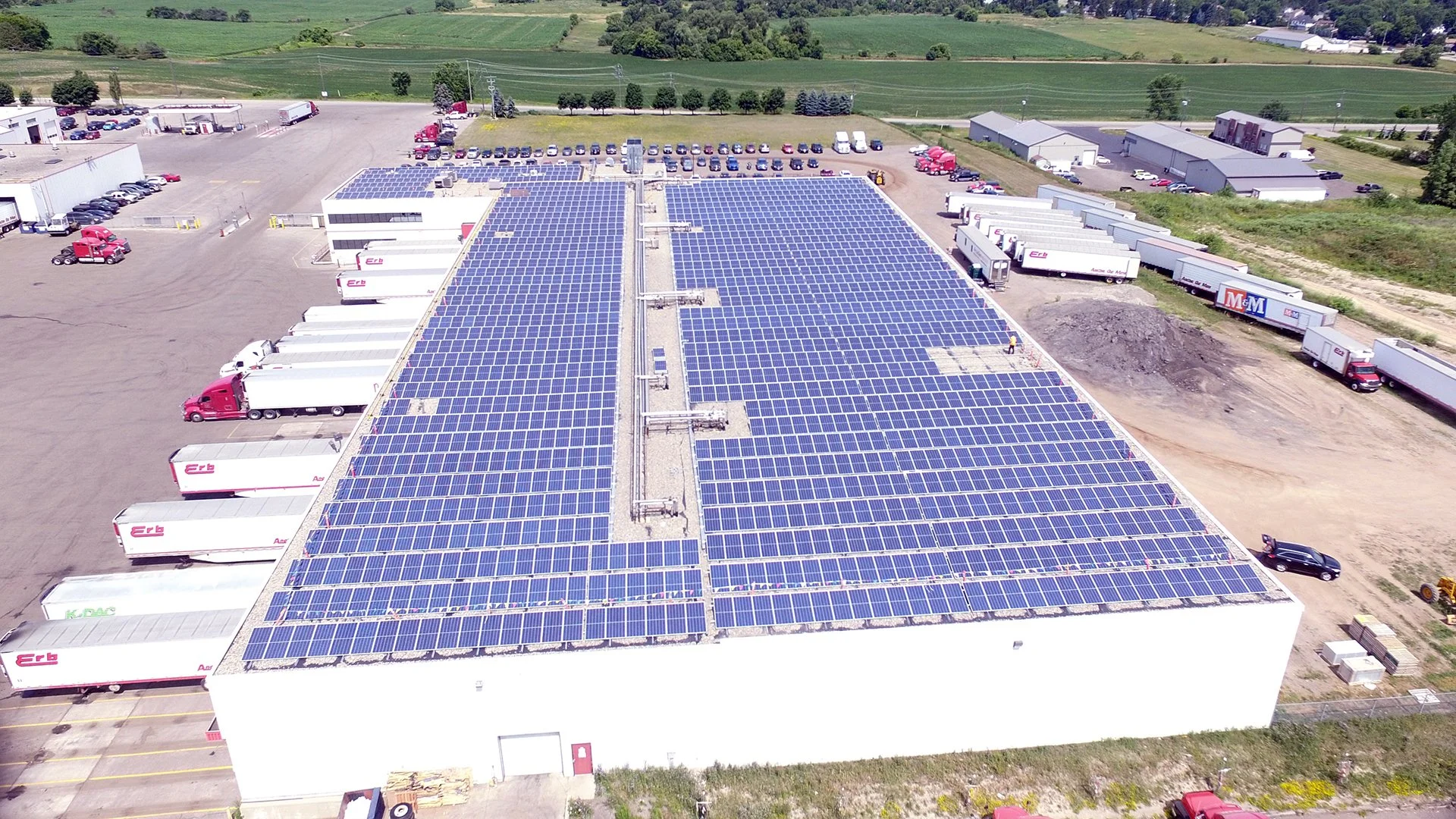
Large roof footprints: Most wineries and food processing facilities have expansive, low-pitch commercial rooftops that are well-suited for rooftop solar arrays. But even without sufficient rooftop space, ground-mounted systems or solar carports are functional alternatives.
Stable daytime loads: As described above, solar generation hours and facility operating hours naturally align. This means more of the power generated goes directly into operations, not back to the grid.
Long operational lifespans: Food processing facilities and wineries are built for long-term operation. Unlike some commercial sectors that shift with short-term market cycles, these businesses plan infrastructure investments over decades. The lifespan of solar infrastructure is also measured in decades, aligning with that same long-term approach to planning and operations.
Electricity-dependent operations with limited flexibility: Food processing systems need to run during core operating hours and can’t easily shift to off-peak periods without disrupting production or food safety standards. On-site solar is highly effective at reducing daytime electricity consumption from the grid.
Solar Energy Offers Price Certainty
Businesses across Ontario are struggling with energy costs. It’s more than just the expenses that make it frustrating, it’s the unpredictability. Having little control over how much energy is used and how much it will cost makes long-term planning difficult. This is especially relevant for wineries and food processing facilities, since they rely on continuous operations and energy-intensive equipment.
Solar helps solve this problem by providing a degree of price certainty over time. Instead of relying entirely on electricity purchased from the grid, facilities can generate power on-site during the hours when operations are often consuming the most energy. That can help offset daytime electricity demand and create more stability around long-term operating costs.
Case Study: Pelee Island Winery
VCT Group's work with Pelee Island Winery demonstrates what this looks like in practice.
Pelee Island Winery is internationally recognized for its award-winning wines and commitment to sustainable production. Recognizing that energy use was a significant and growing operational cost, Pelee partnered with VCT Group to deploy rooftop solar at scale.
The project includes two systems: a 413 kW DC rooftop retrofit and a 311 kW DC net-metered installation, along with on-site EV charging infrastructure.
Over a 25-year period, the system is expected to deliver approximately 825,000 kWh of annual electricity generation, an estimated 12,715 tonnes of CO₂ emissions avoided, and the equivalent of 29,246 barrels of oil displaced.
Why Invest in Solar Now with VCT Group
Now’s a better time than ever to invest in commercial solar. While grid electricity costs have only increased in recent years, solar is moving in the opposite direction. The capital cost of a solar system today is lower than it was five years ago, thanks to increased production.
Not only that, but several funding streams are available for commercial solar projects. Tax credits like the Clean Electricity Investment Tax Credit (CE ITC) and the Clean Technology (CT) Investment Tax Credit (ITC), as well as the Save on Energy program, are making solar more affordable and accessible than ever before.
As demand for solar rises, these funding streams, designed to incentivize the clean energy transition, may not last forever.
VCT Group helps businesses understand whether solar is a realistic and worthwhile investment for their facility. We do an initial site assessment to assess roof space, energy usage, building layout, and sunlight exposure, which helps us determine whether on-site solar generation makes sense for the property.
The team also helps identify available rebates, incentives, financing programs, and tax credits that may help reduce upfront project costs. Because programs and eligibility requirements can change over time, having guidance through that process can make it easier for businesses to understand what opportunities are available.