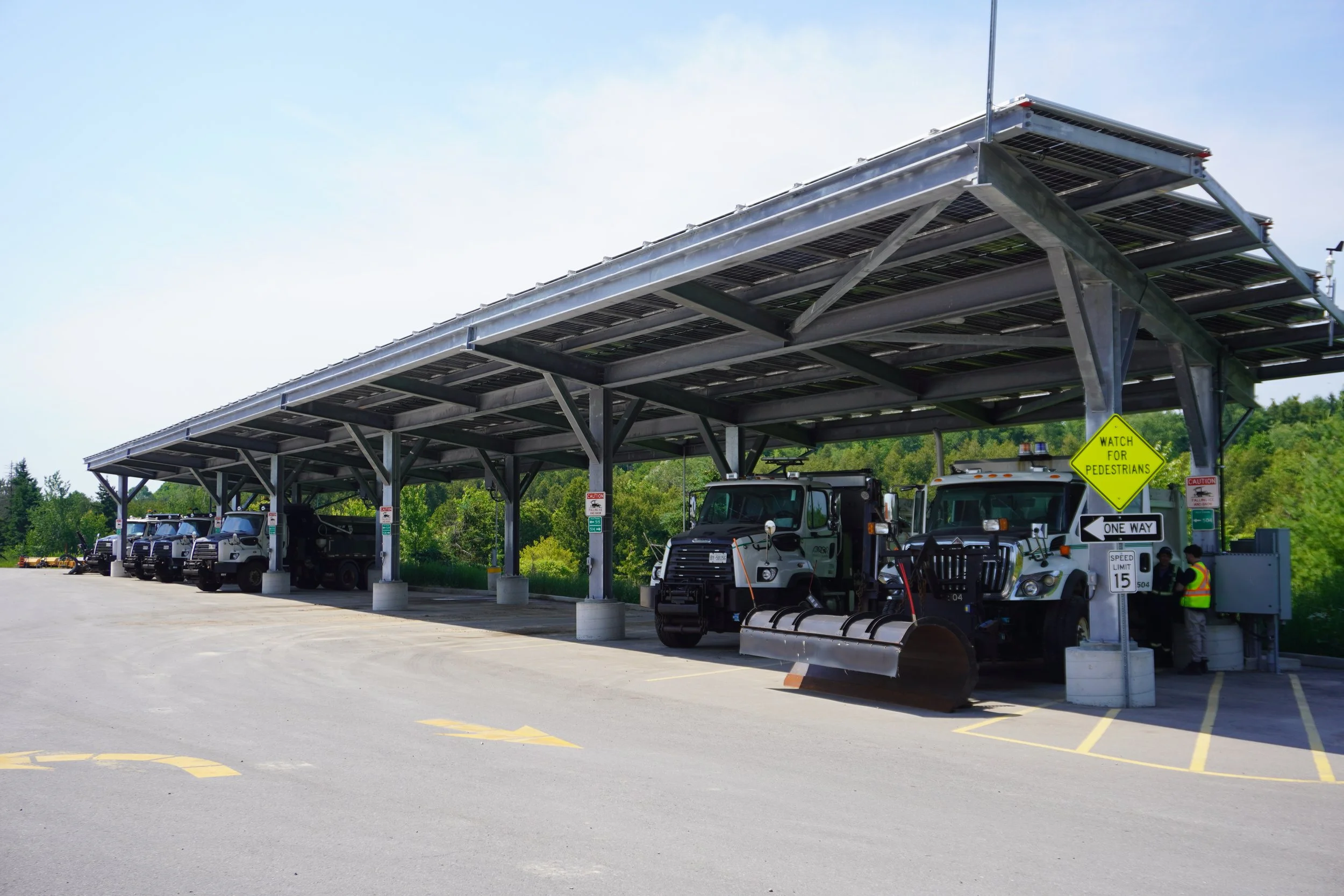
Caledon Yard
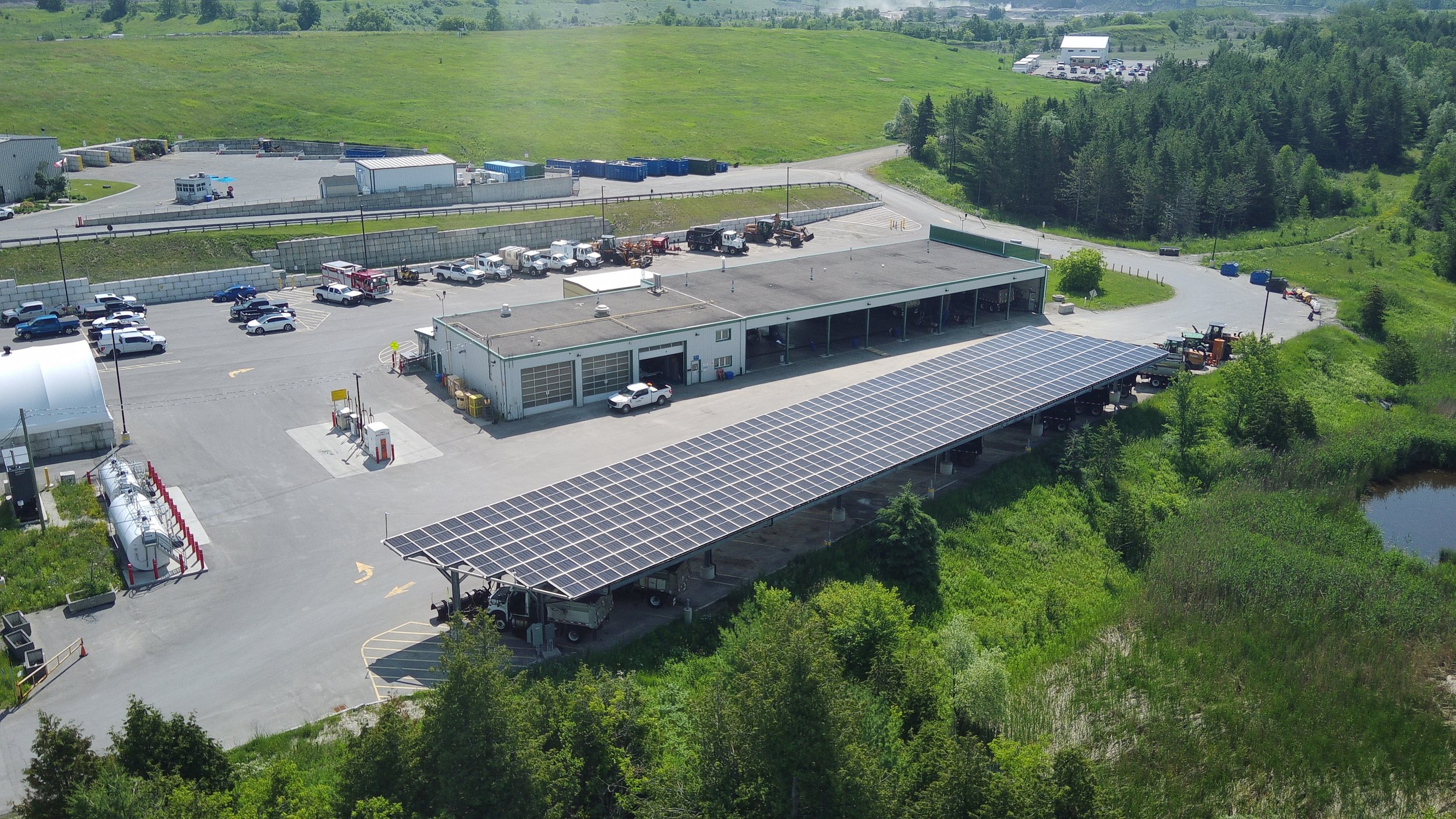
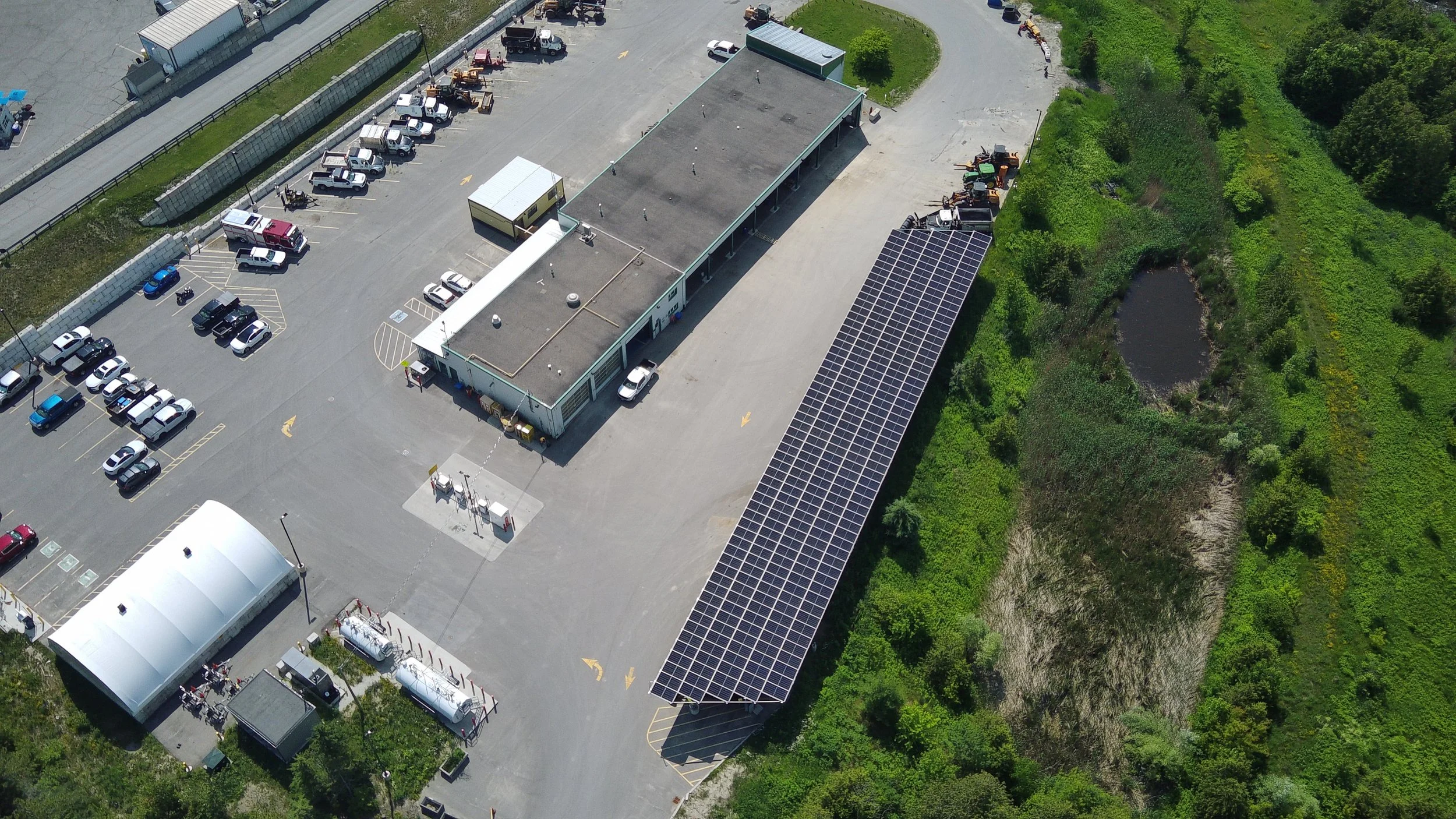
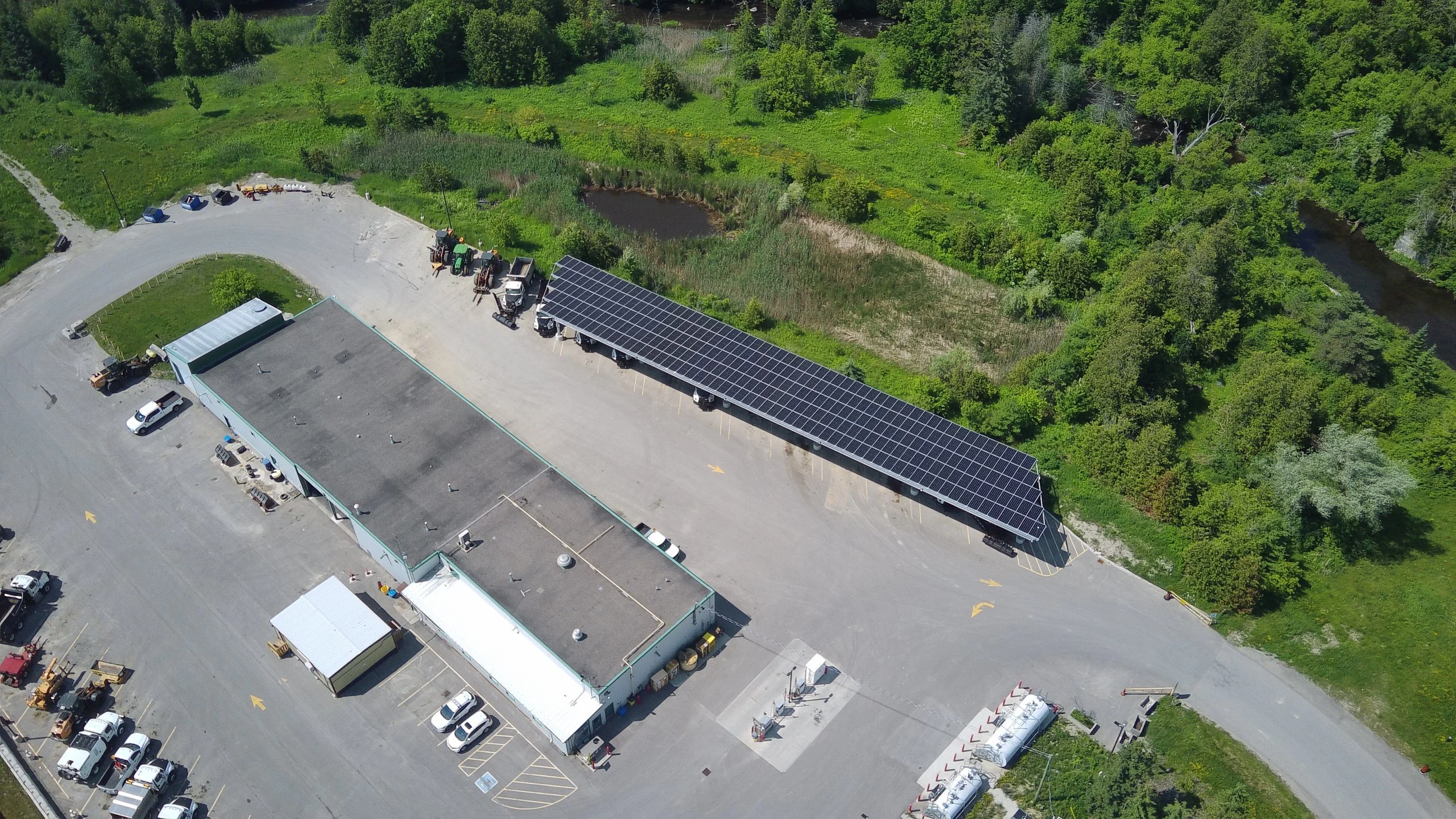
Solar Canopy - Caledon, Ontario
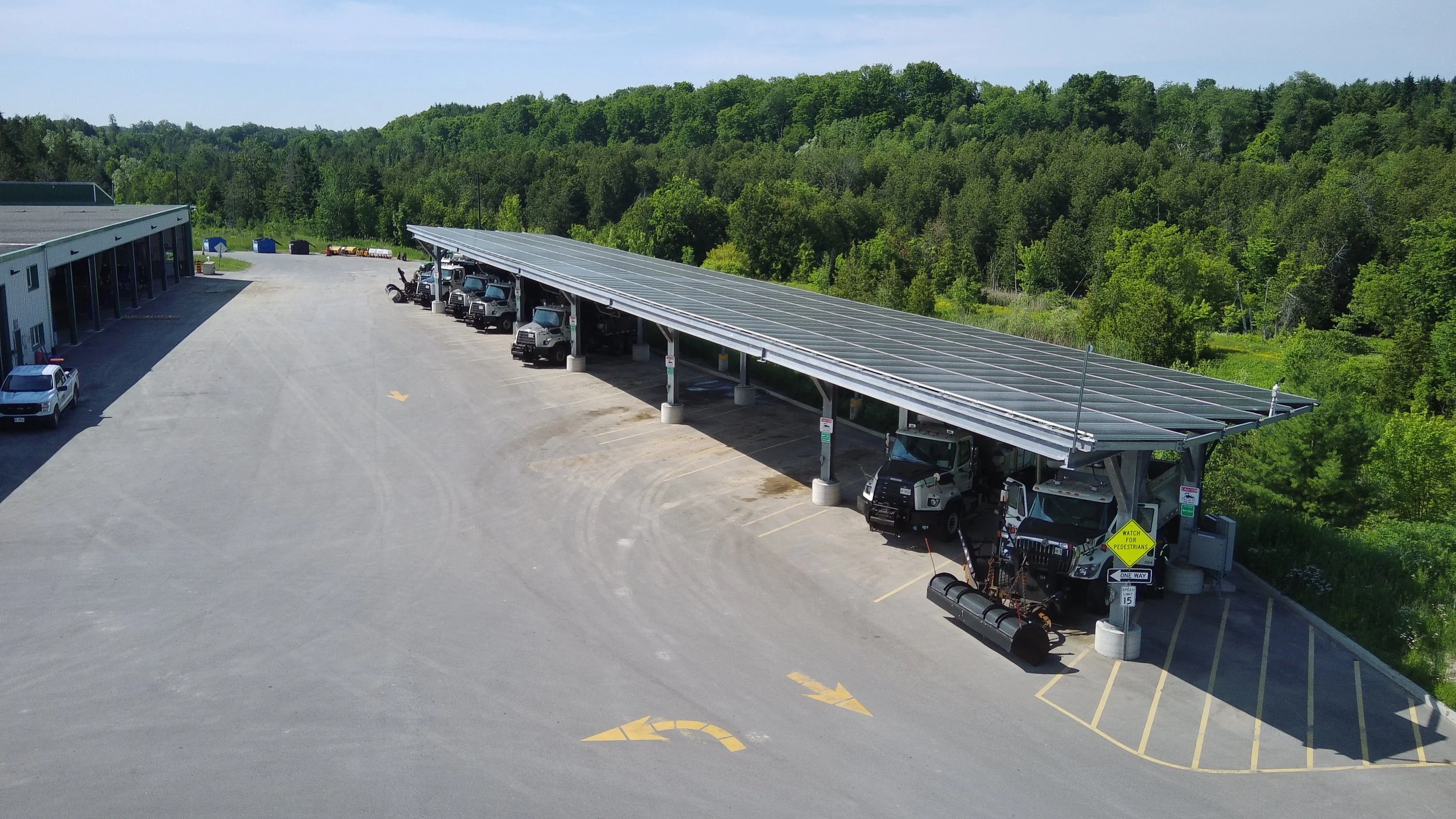

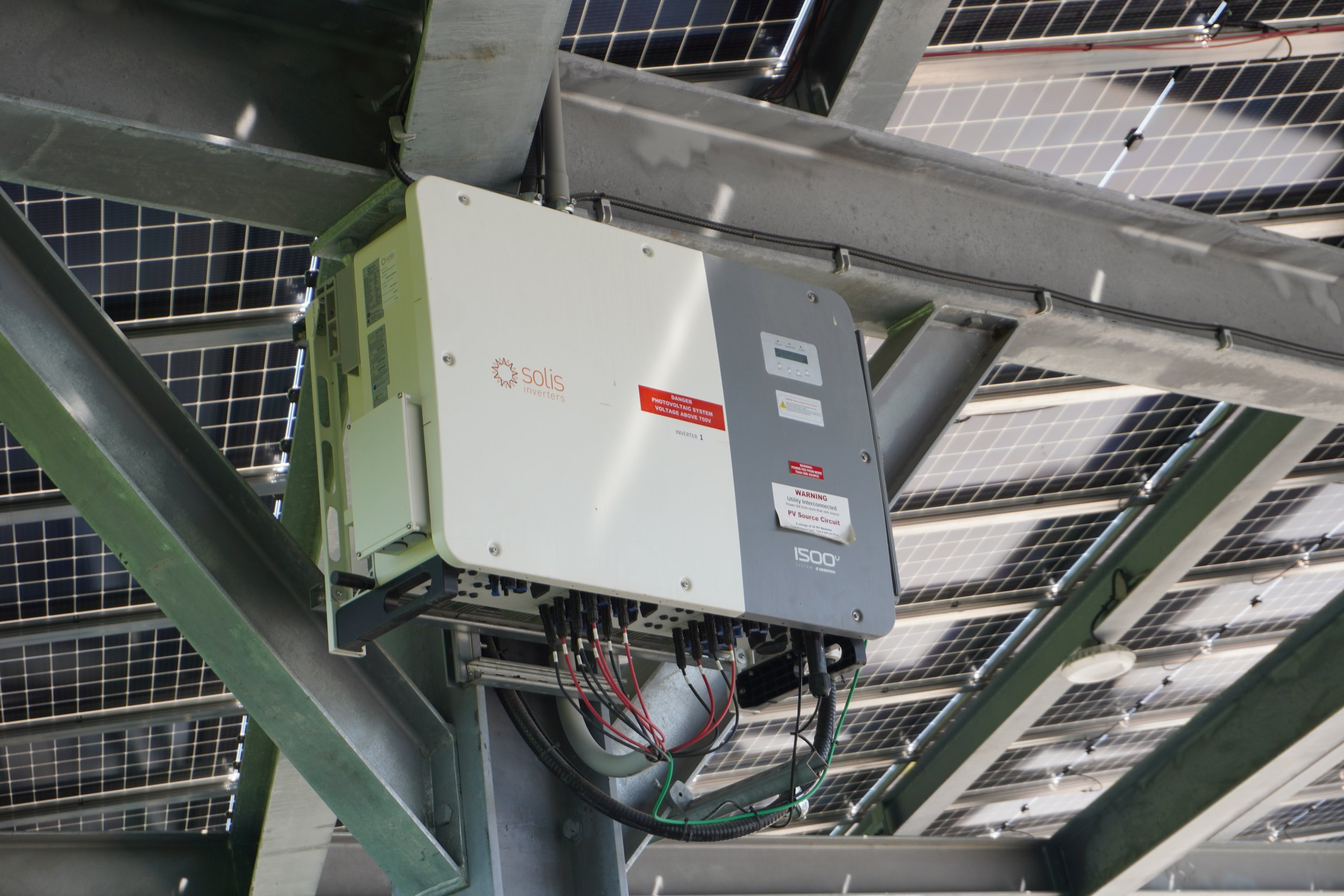
178 kW
DC
700 kW
AC
196,000 kW
kWh generated yearly

290
Panels Used

2,869
Tons of CO2 Emissions Saved (Tons/25yr)

652
Acres of Trees Planted
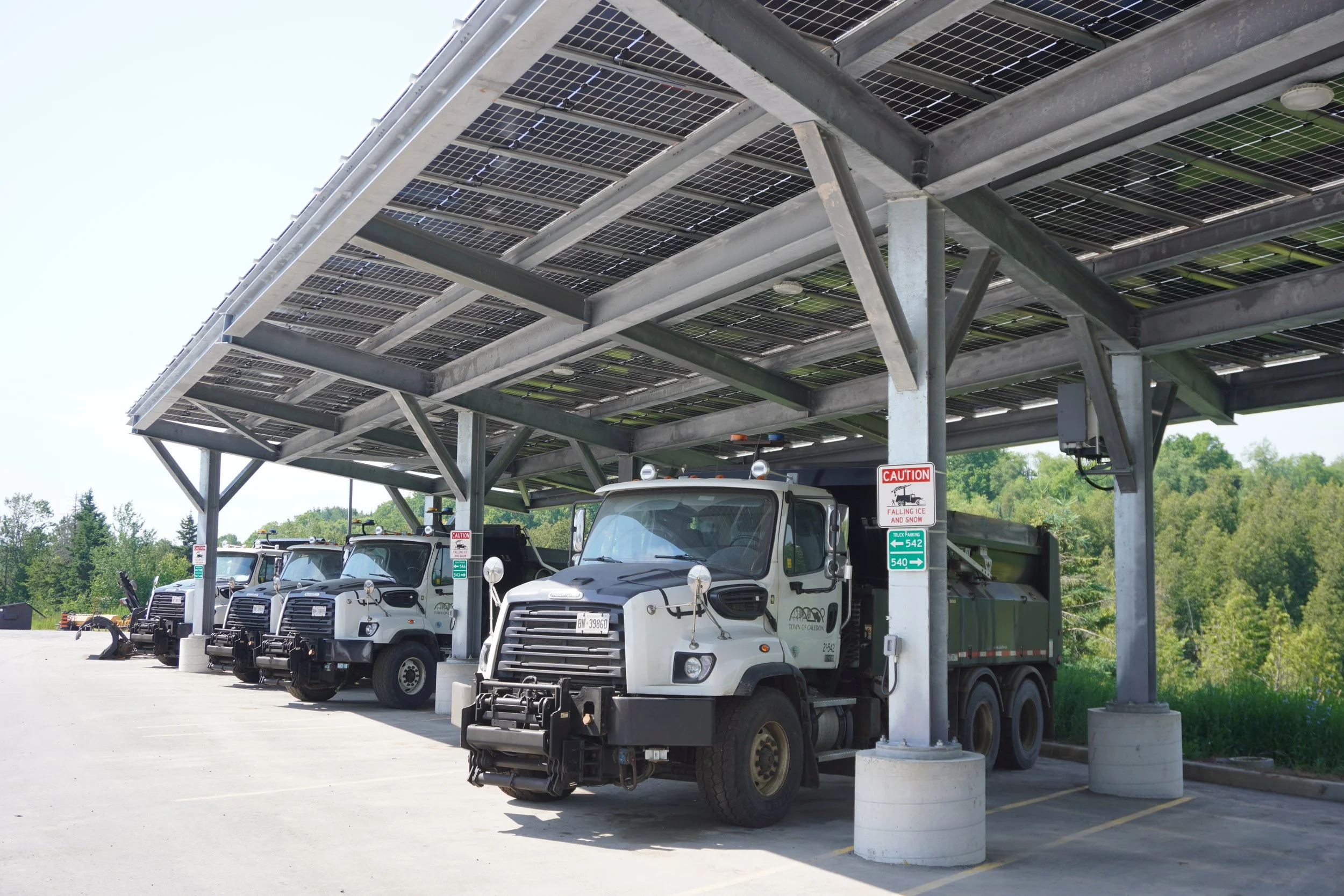
The City of Caledon | Caledon Yard 2
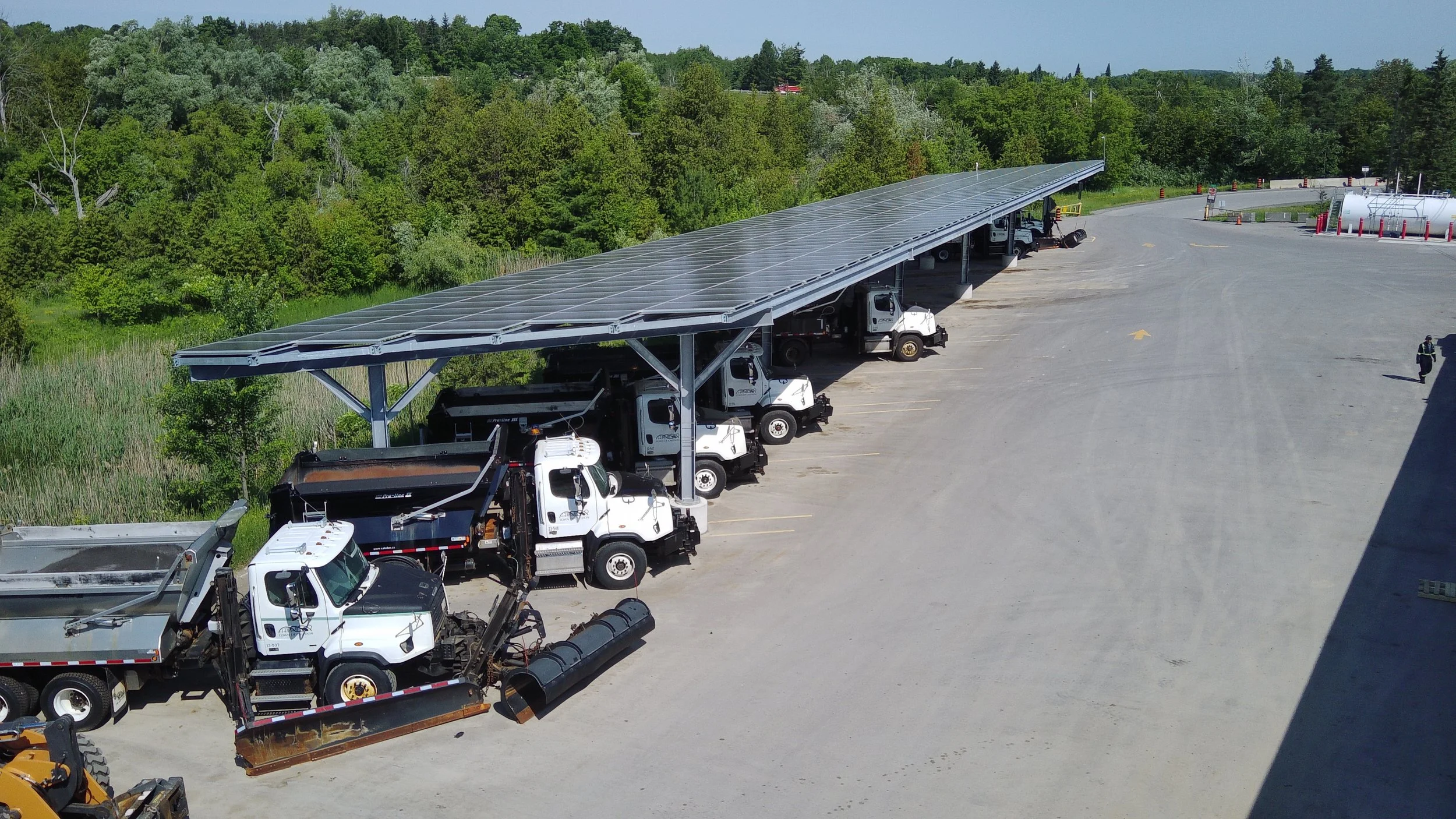
A Solar Carport Built for Power Generation and Fleet Shelter
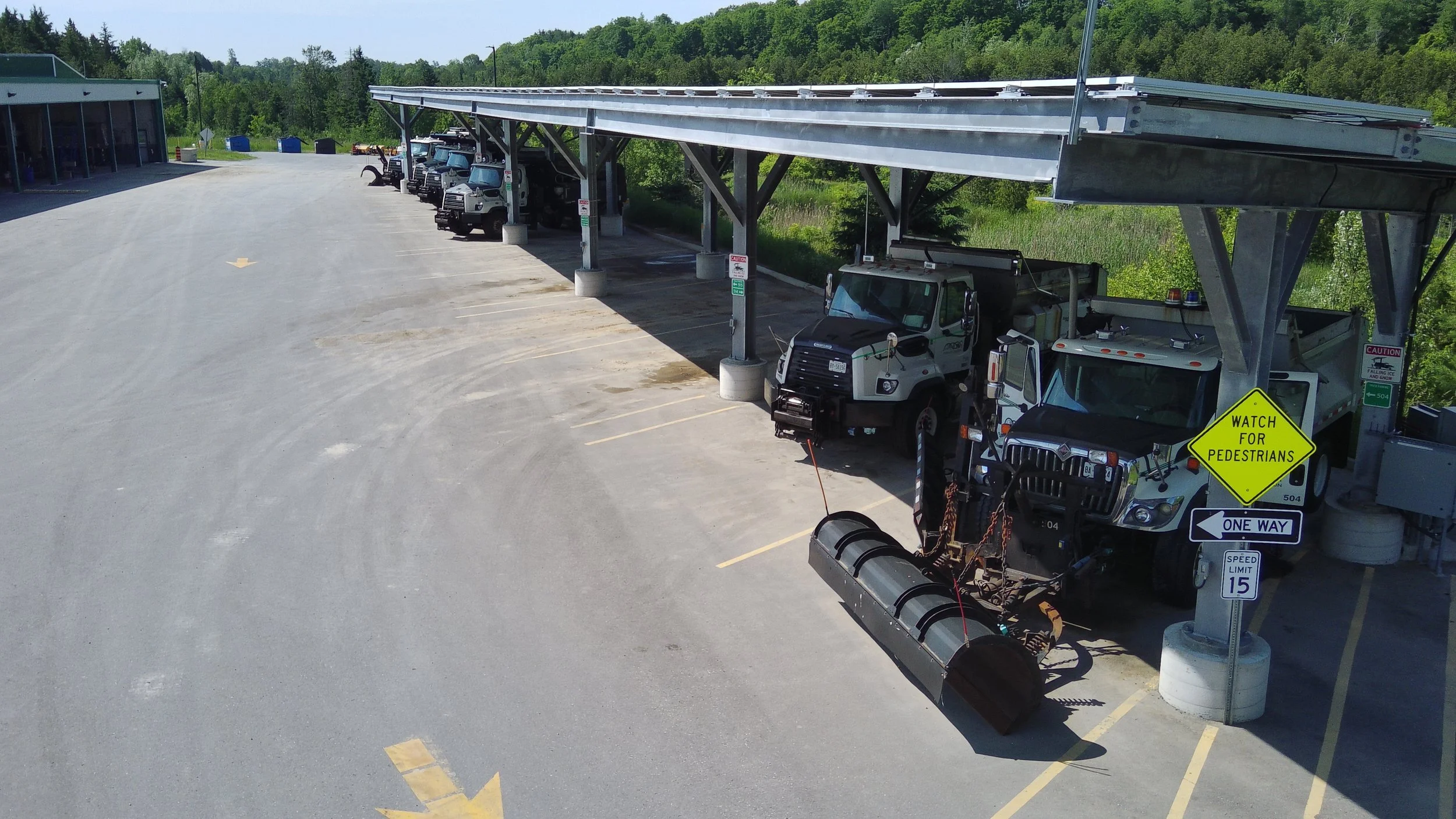
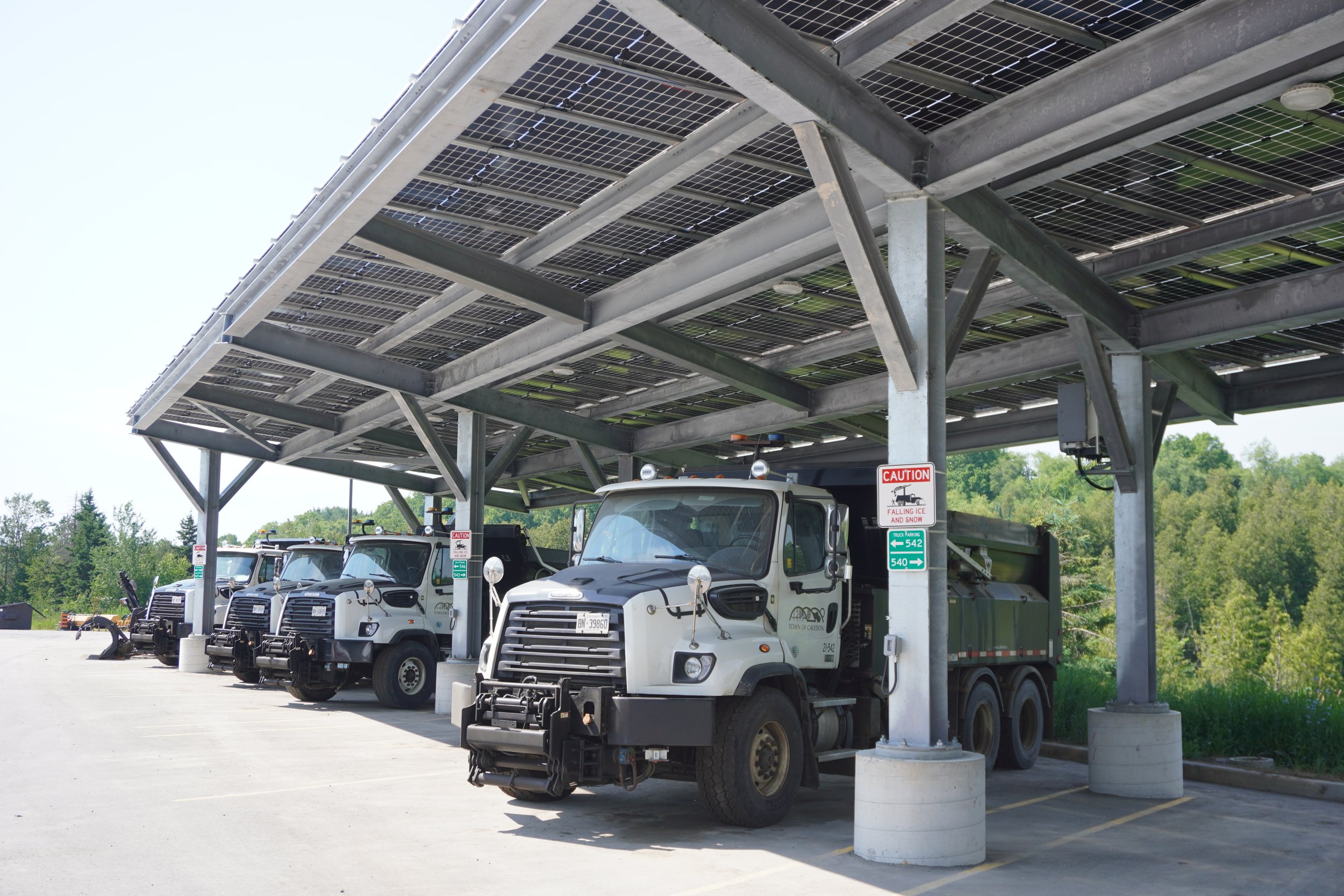
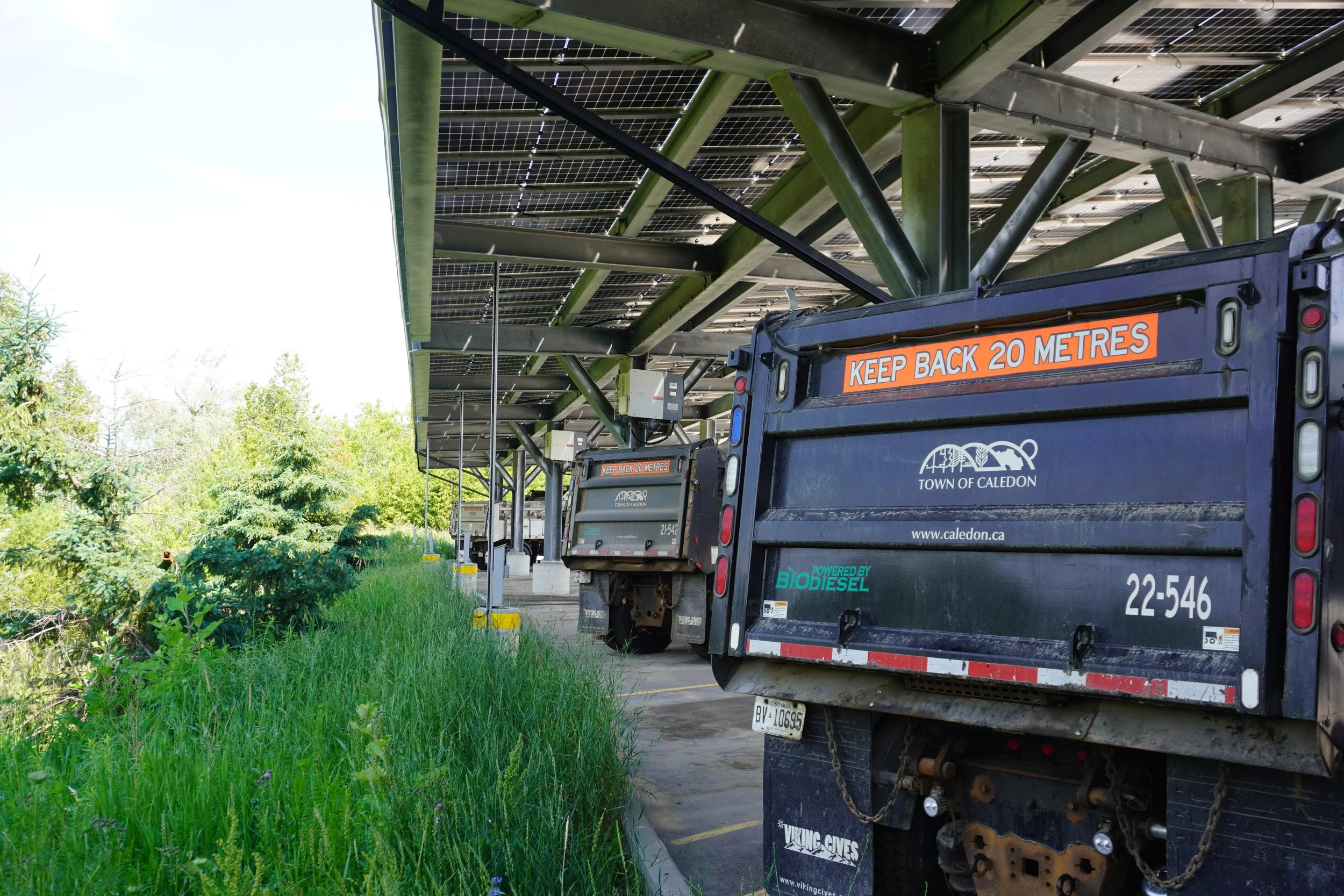
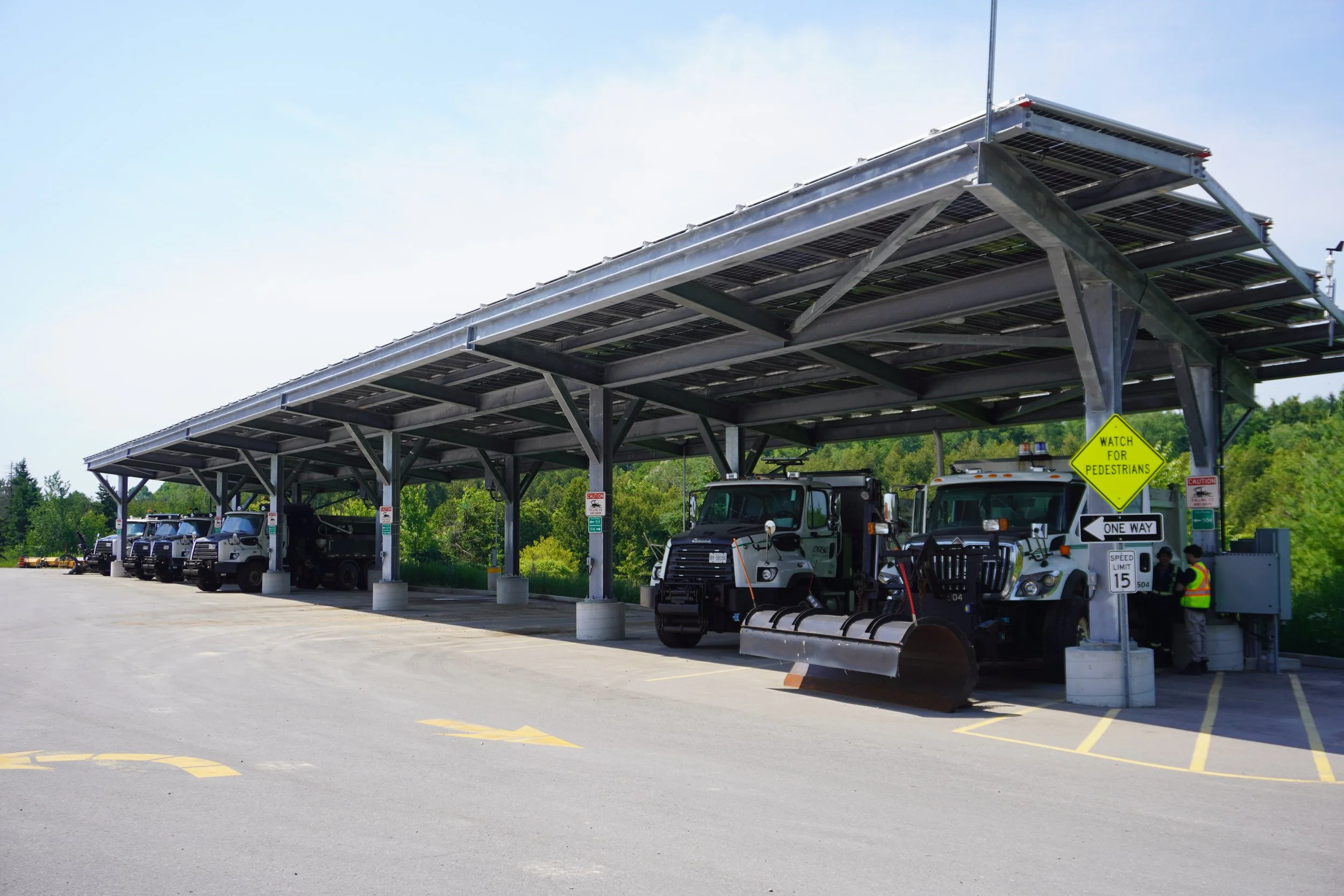
Caledon Yard 2 is a municipal operations facility of the City of Caledon, responsible for keeping the town's roads safe and clear through Ontario winters. The team wanted a carport that could shelter its full-size snowplow fleet and generate solar power — but with a catch: no support frames between bays, so oversized vehicles could maneuver freely in and out. That single requirement shaped the entire structure. The result: crews roll out fast, without scraping ice or waiting on a cold engine, while the array works toward the site's energy goals.
Engineering Around the Fleet
Sheltering a full snowplow fleet without a single upright between bays called for a fully custom carport — a standard, off-the-shelf design simply wouldn't do. The client's vision called for a steel frame, engineered to span the open bays the fleet needed. On top of that structure, our team designed and installed the solar array alongside our proprietary water and snow management racking system, purpose-built for solar canopies to keep runoff and snow load managed cleanly across the structure — a critical detail for a facility built to handle Ontario winters.
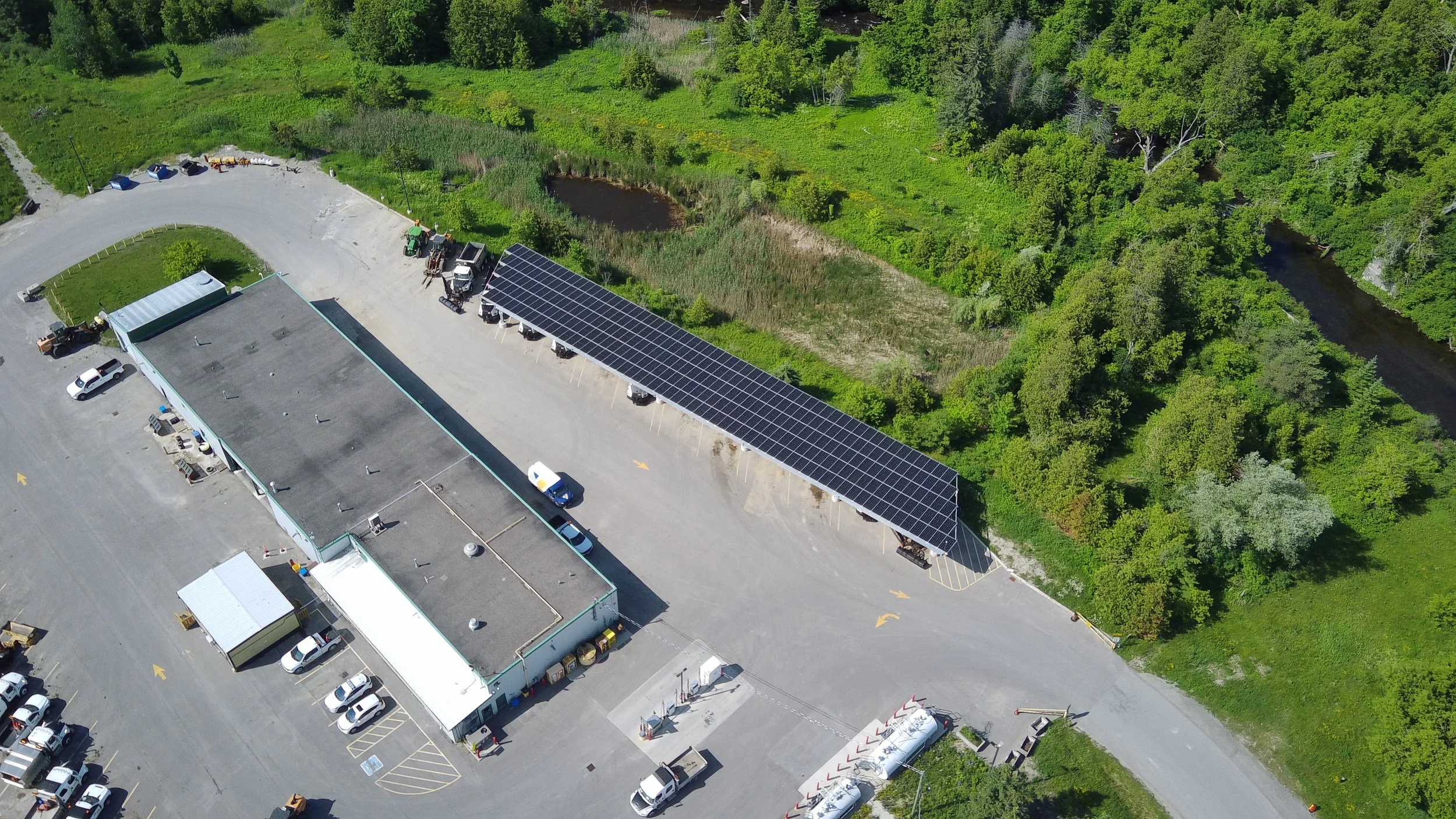


Net Metering System
Supporting a Municipal Fleet Facility
Caledon Yard operates under a net metering arrangement, allowing the facility to generate solar power and receive credit for surplus energy sent back to the grid. This structure supports the project's dual-purpose goals — offsetting the facility's energy use while the carport itself delivers separate, non-energy value through fleet shelter.

Class A vs Class B
Ontario splits electricity customers into two GA (Global Adjustment) billing classes:
Class A — Large industrial/commercial users (like Pano Cap) enrolled in the Industrial Conservation Initiative. They pay GA based on their share of usage during Ontario's five annual peak-demand hours, rewarding them for reducing draw during those windows.
Class B — Most other businesses, who pay GA based on total monthly consumption, with no peak-hour incentive.
As a Class B municipal customer, Caledon Yard's costs are driven by total consumption rather than peak-hour timing — which is part of why net metering (maximizing total solar generation) was the better fit than load displacement.
Eligible for the Clean Electricity
Investment Tax Credit (CE ITC)
As a municipal facility, Caledon Yard is eligible under the 15% Clean Electricity Investment Tax Credit (CE ITC) — a federal incentive distinct from the 30% Clean Technology ITC (CT ITC), which applies to private-sector projects. The Clean Electricity ITC is available to taxable and non-taxable entities, including municipalities and municipal utilities, that invest in clean electricity generation and storage — making it a relevant incentive for public-sector projects like this one.