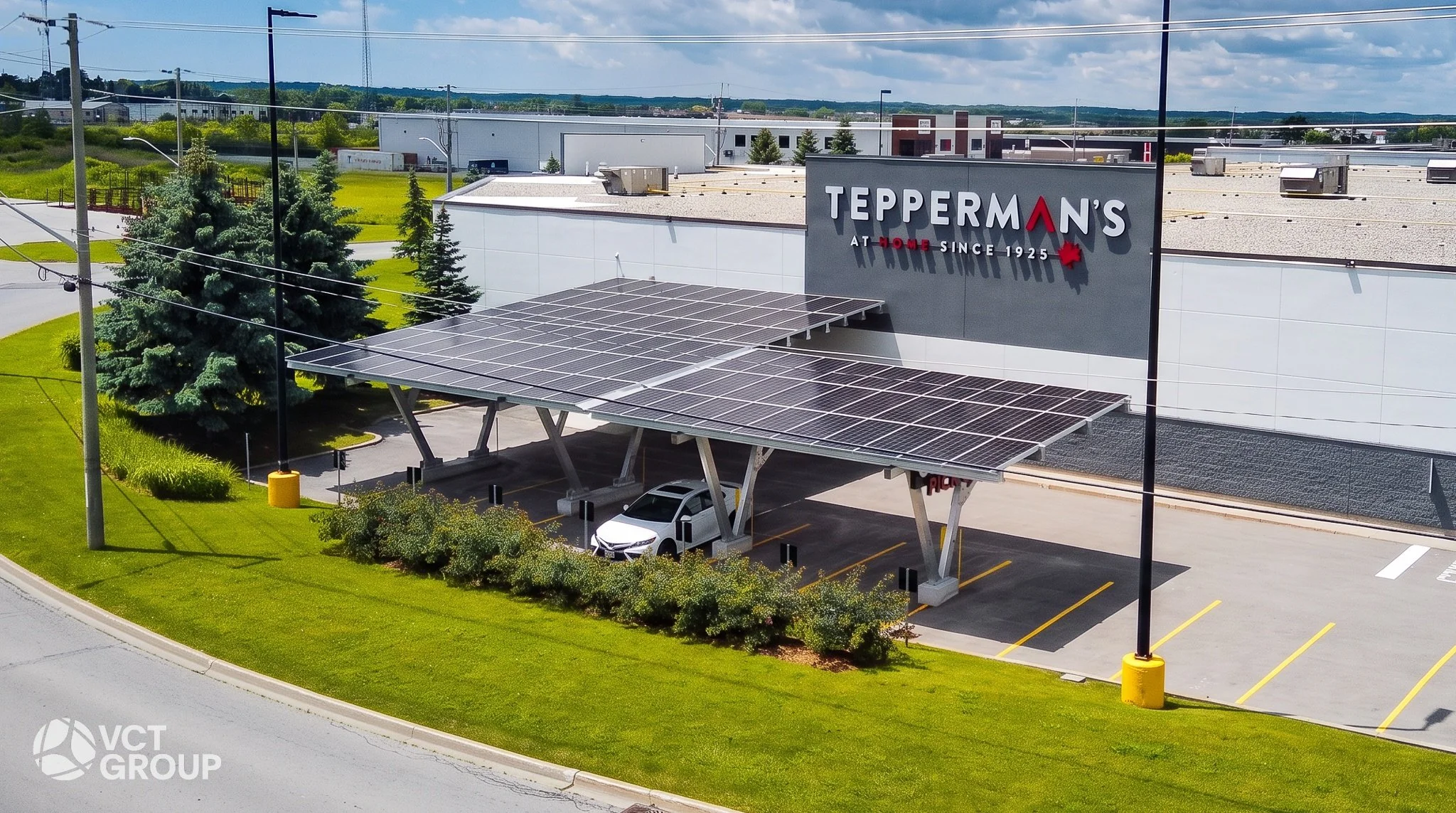
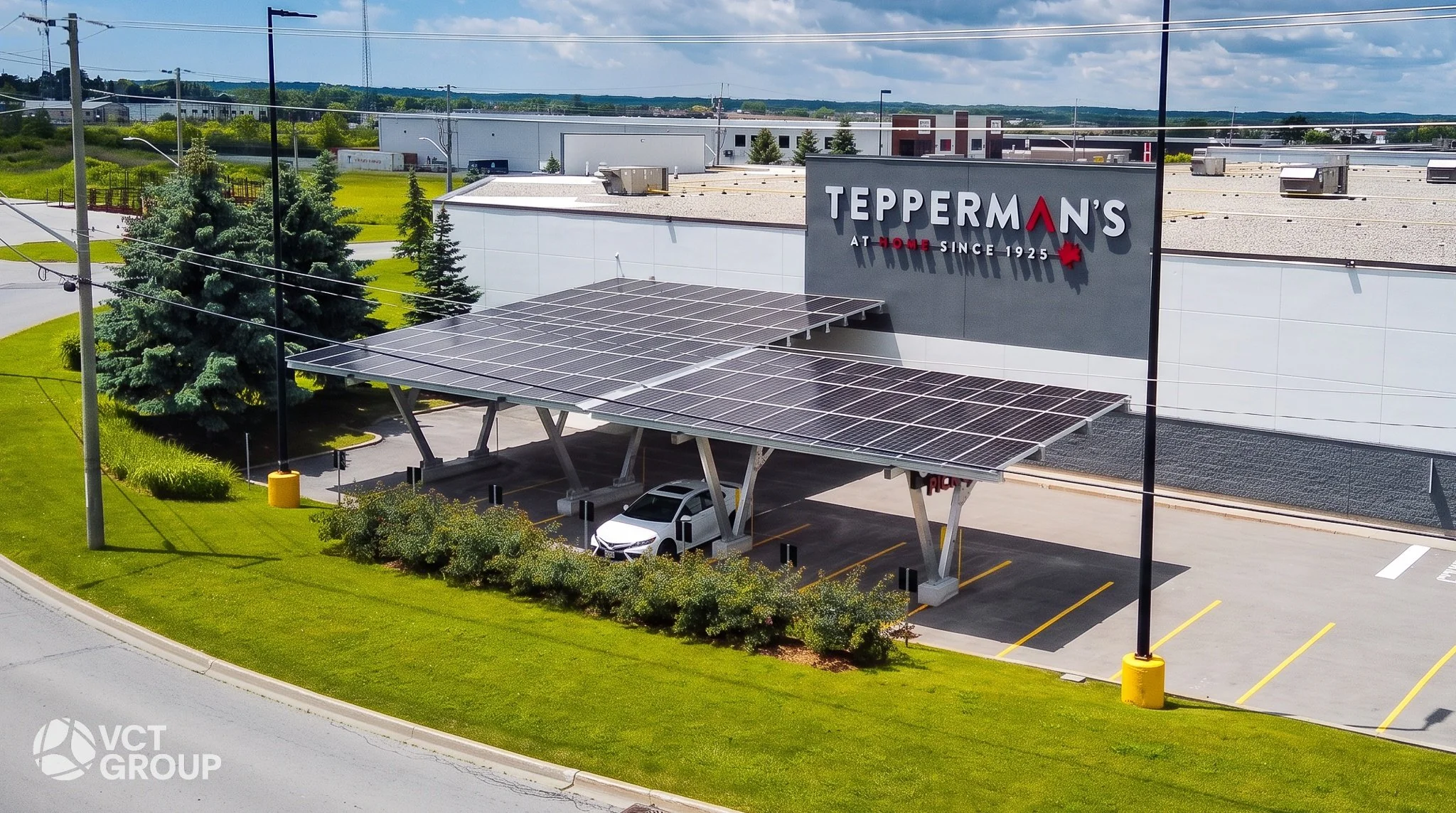
Solar Carport - St. Catherines, Ontario

49 kW
DC
45 kW
AC
48,258
kWh generated yearly
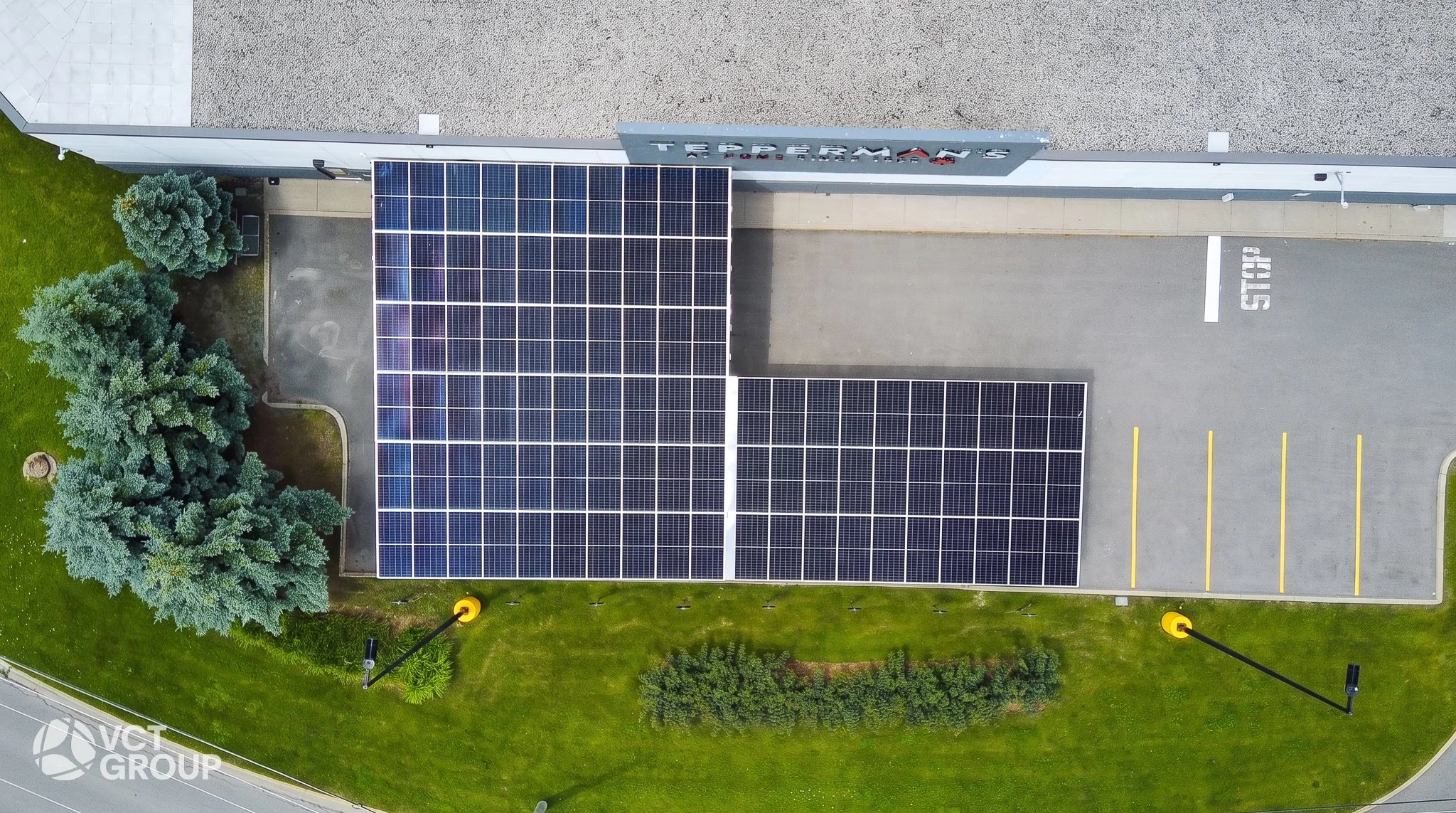
90 Panels
Used

705 Tons
of CO2 emissions saved over 25 years

1,621 Barrels
of oil saved over 25 years
One Structure, Two Jobs
Tepperman's Puts Its Pickup Lane to Work
Founded in Windsor in 1925, Tepperman's is one of Canada's largest family-owned home furnishing retailers, selling furniture, mattresses, appliances, and electronics across seven Ontario stores. Tepperman's first partnered with VCT Group in 2022 on a rooftop solar array at its Kitchener location; you can learn more in the case study here.
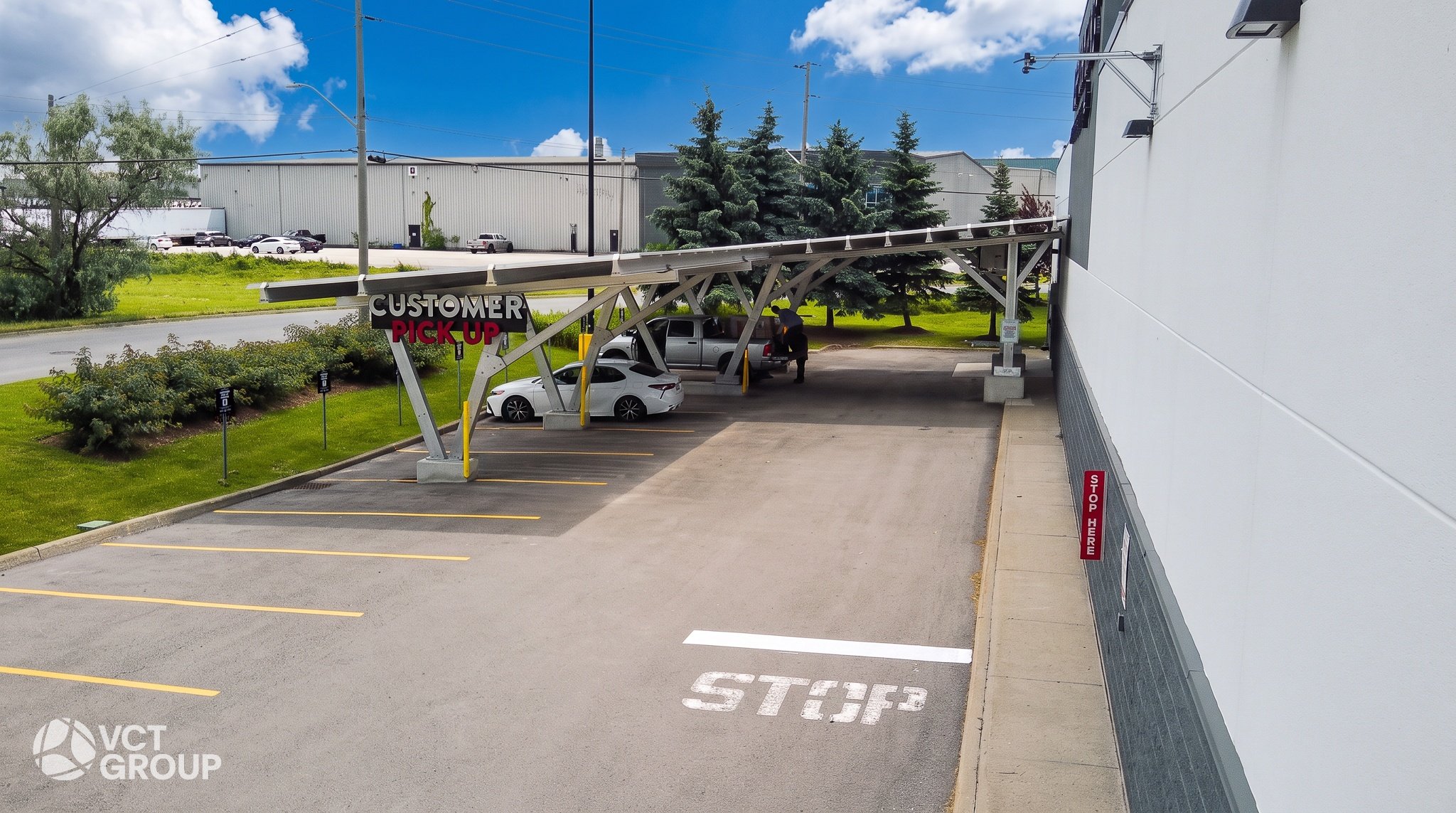
At its seventh store in St. Catharines, Tepperman’s planned to shelter the customer pickup area as it had at other stores: a steel canopy with a solid deck, with solar panels mounted on top like a rooftop array.
Two things made that plan worth a second look. First, the roof was off the table for solar. The store is part of a larger retail complex, and Tepperman's wanted to keep the roof clear for planned future utility upgrades. Second, a shelter with an array bolted on top meant paying for two structures to do one job.
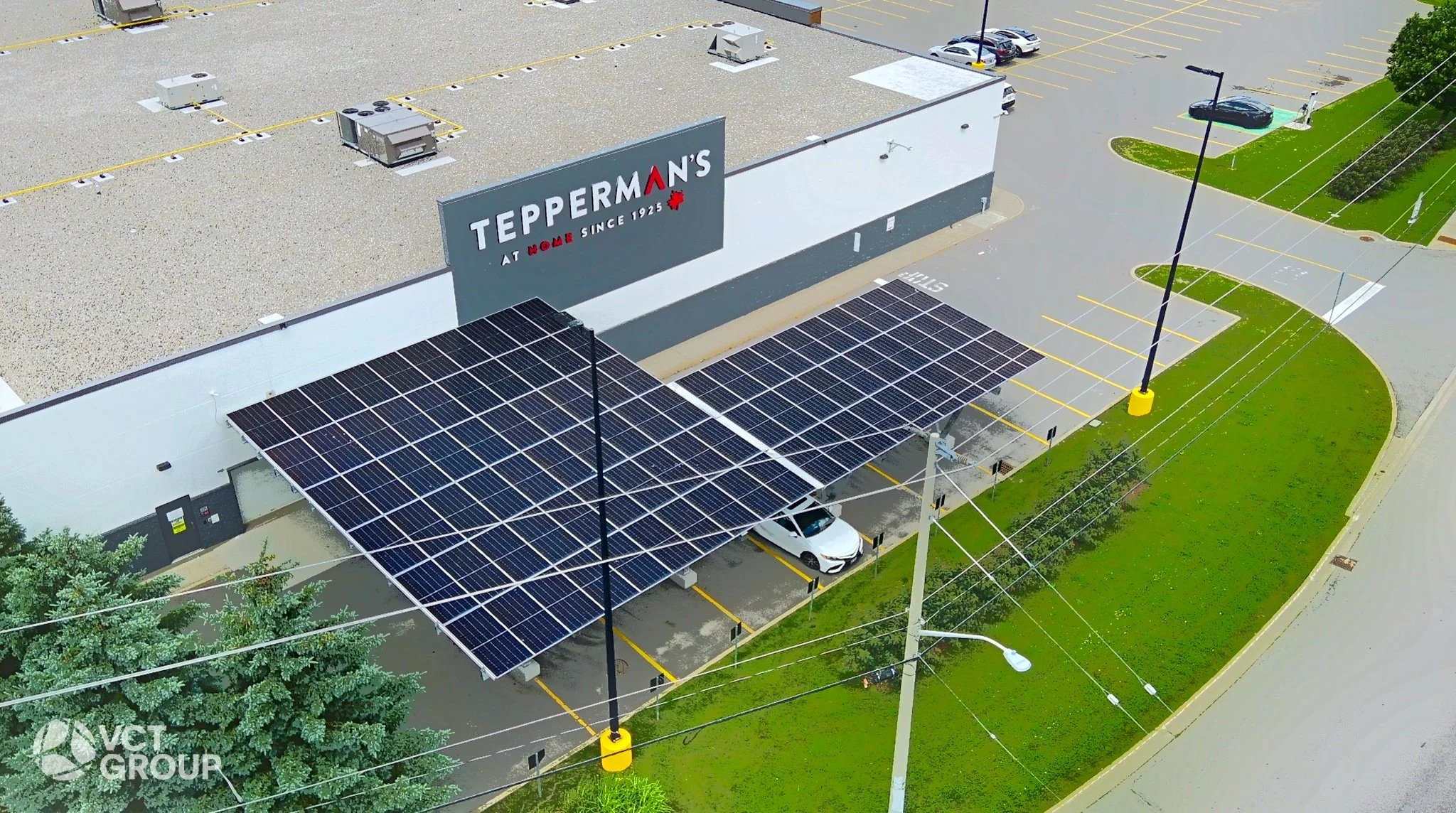
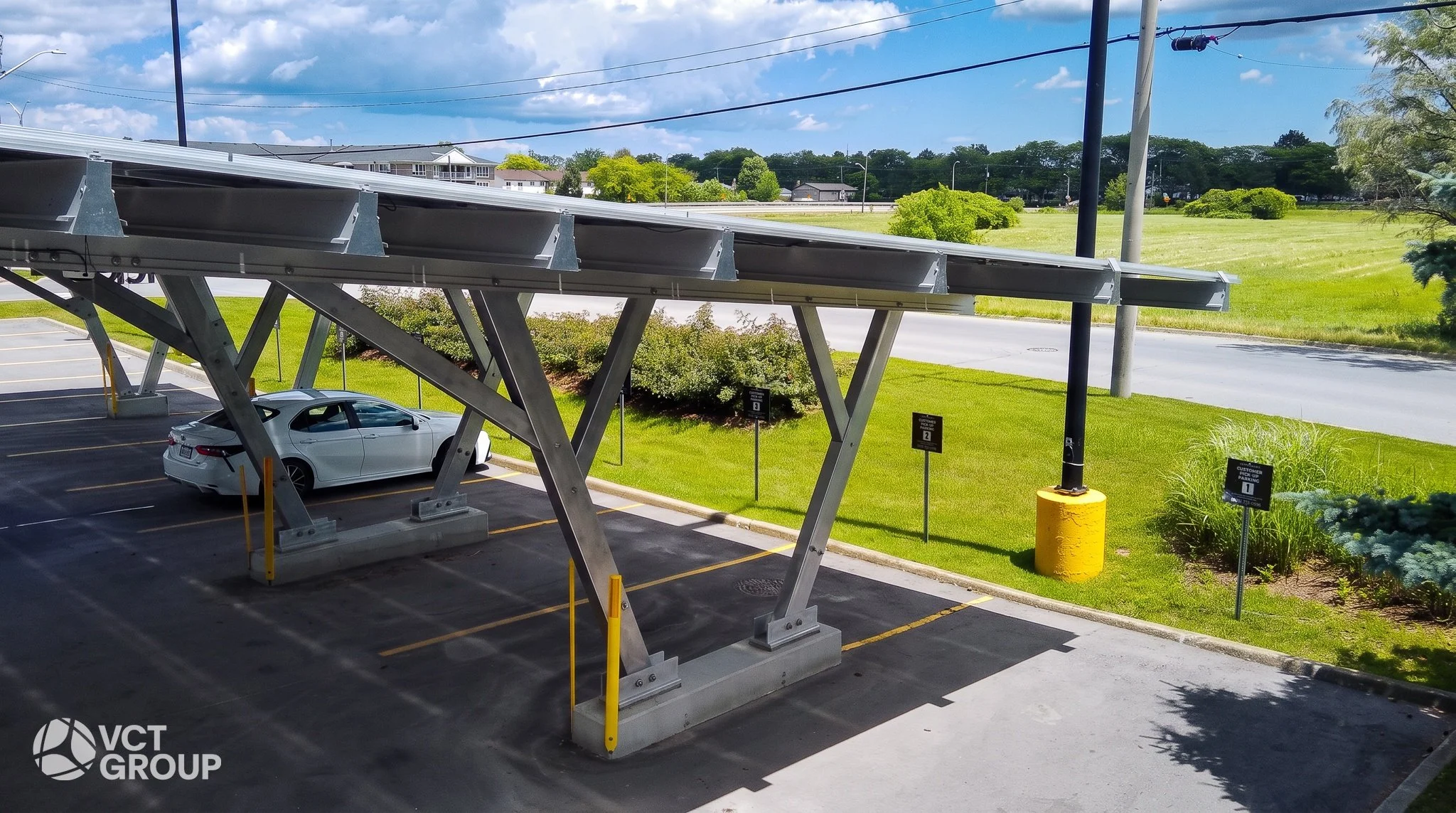
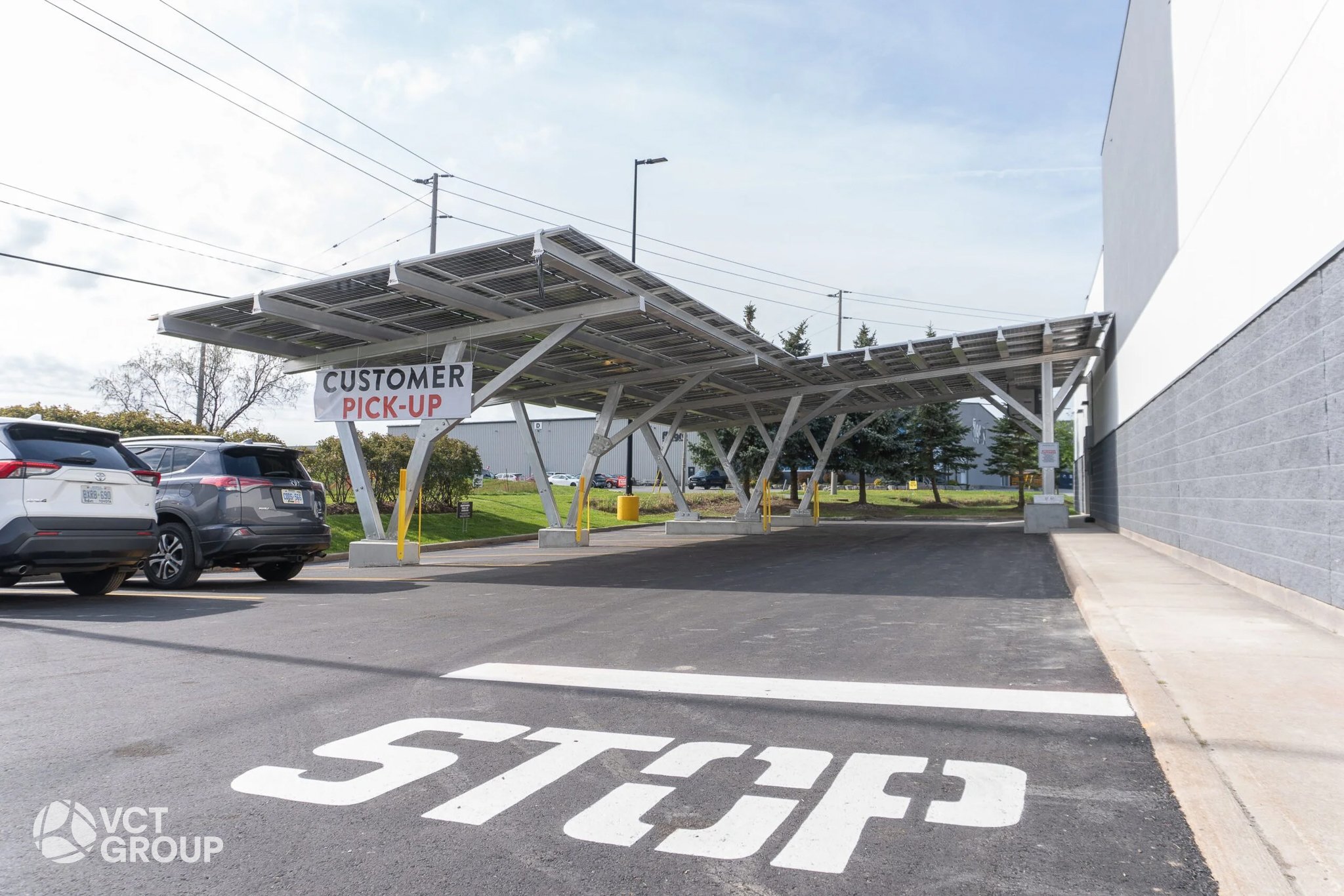
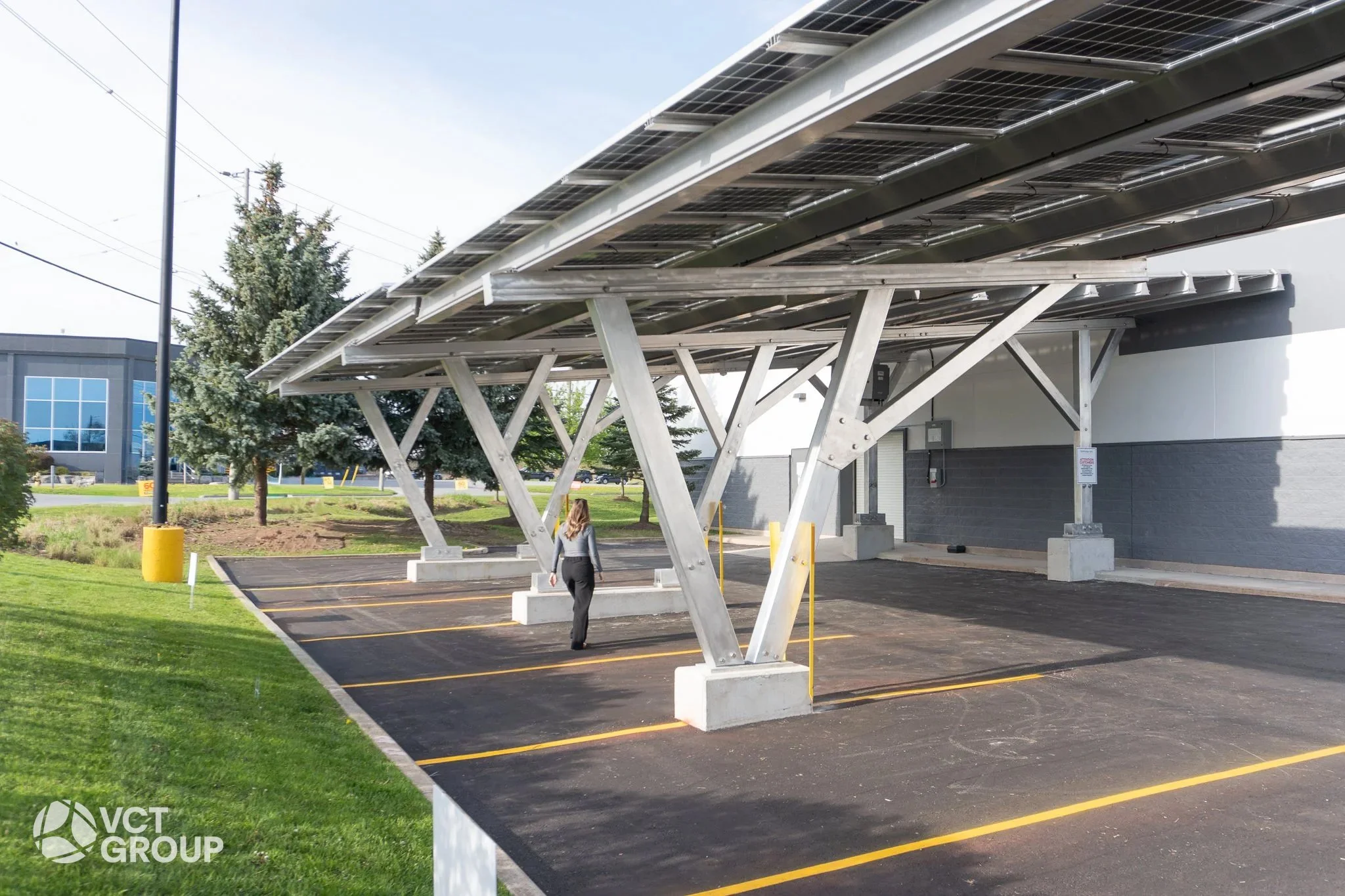
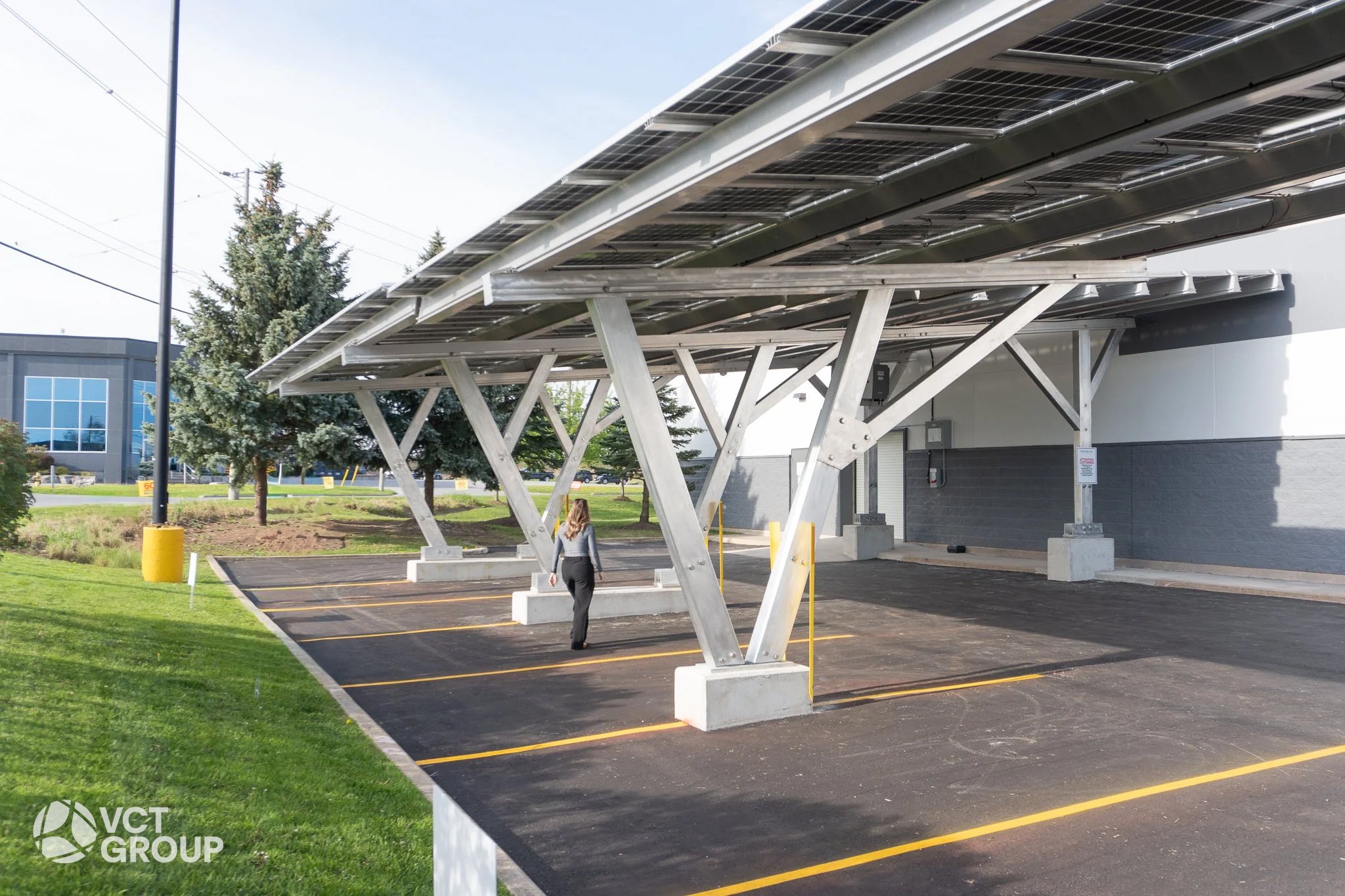
VCT Group proposed one solution: a Heliostation Hermes™ paired with a custom three-column canopy that provides shelter and generates power in a single structure. It also puts the company's sustainability commitment where every customer who pulls in can see it.
For any business with a busy lot and a roof that's spoken for, the lesson is simple: your pickup lane can be a power plant and a statement of your commitment to sustainability.
Built Tight, Built Smart
Precision on a site with no room to spare.
The canopy sits close to the store wall, beside the property line, and near a hydro line, with no laydown space. Every decision had to account for what was around it.
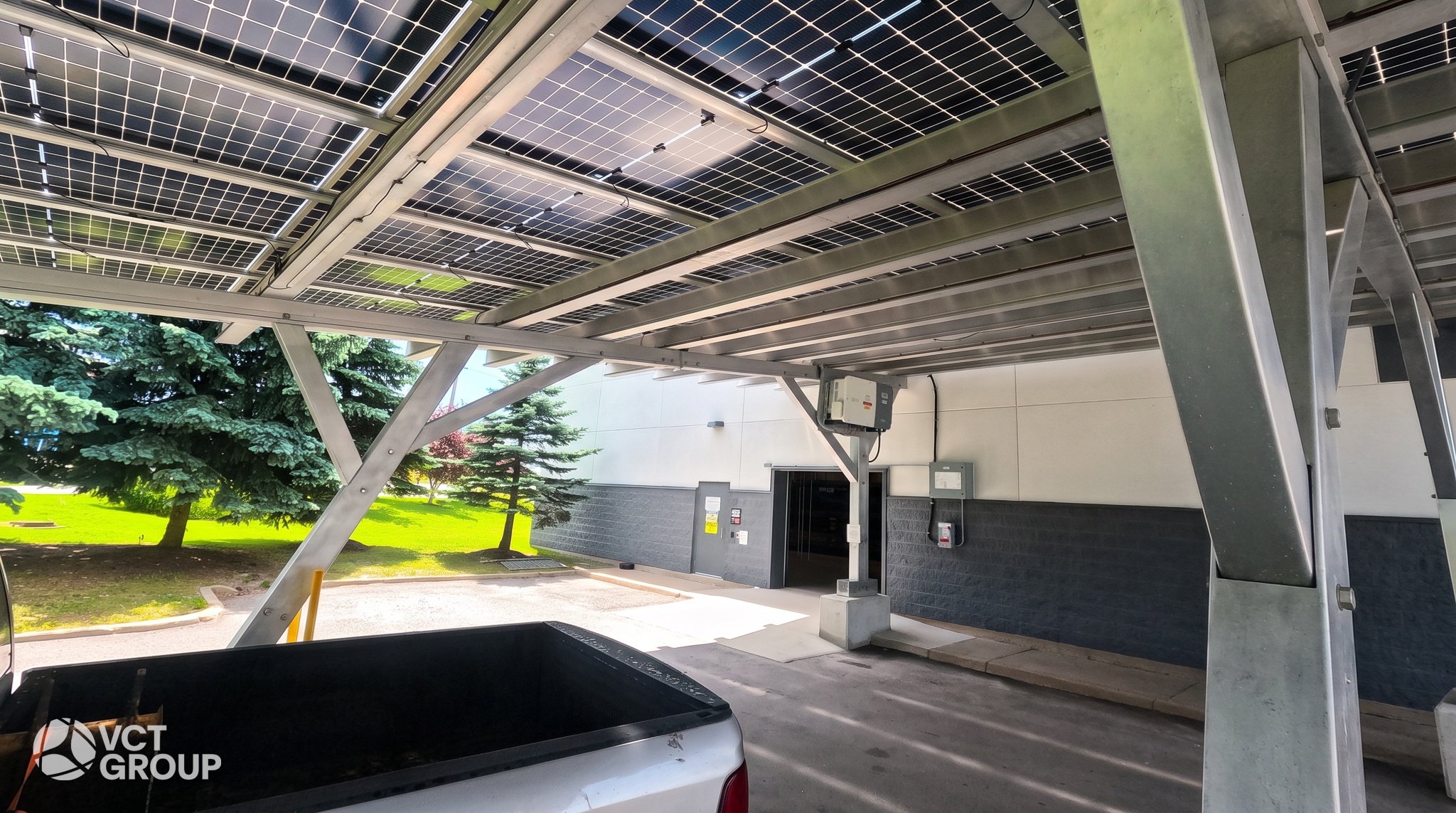
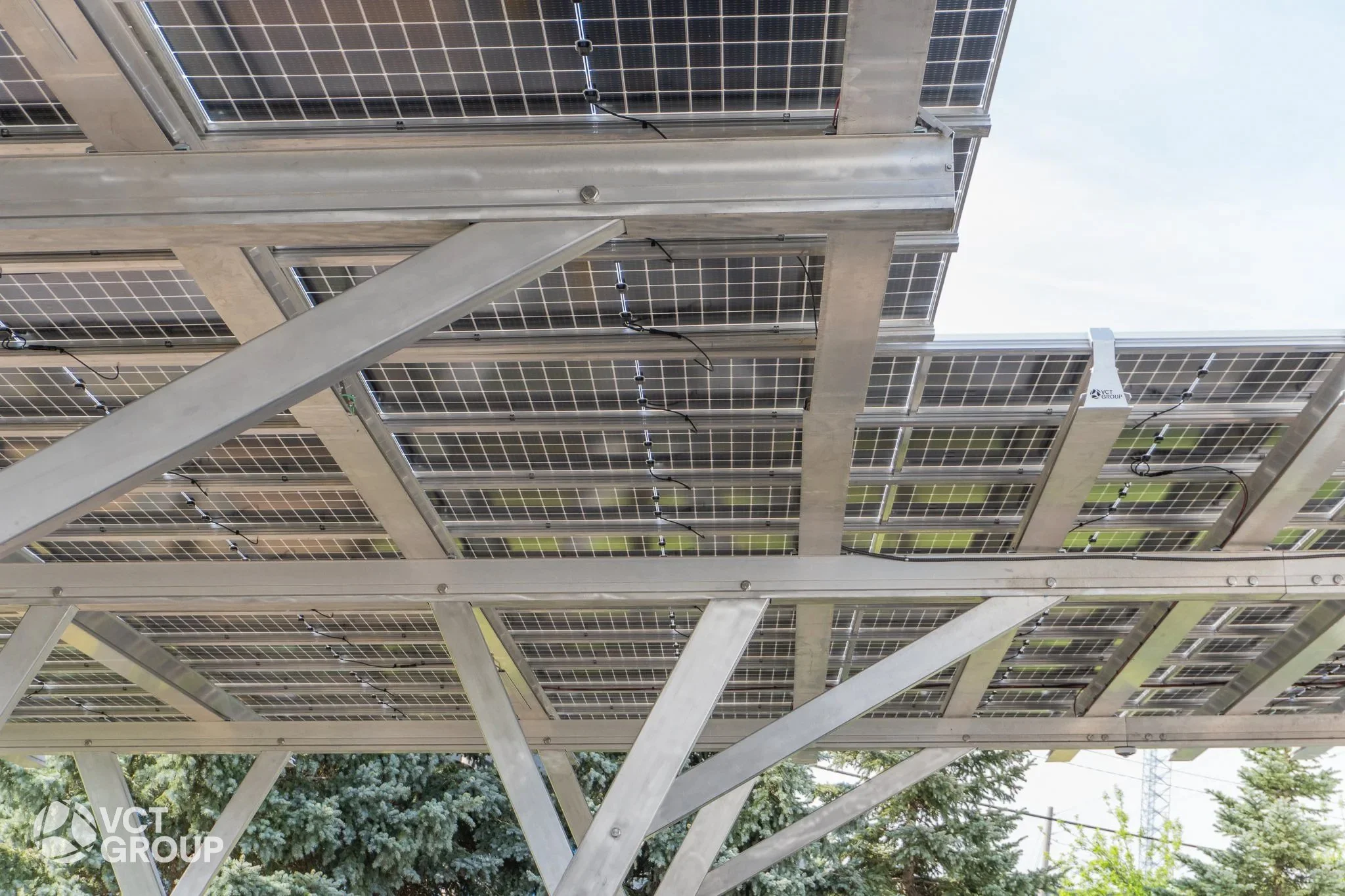
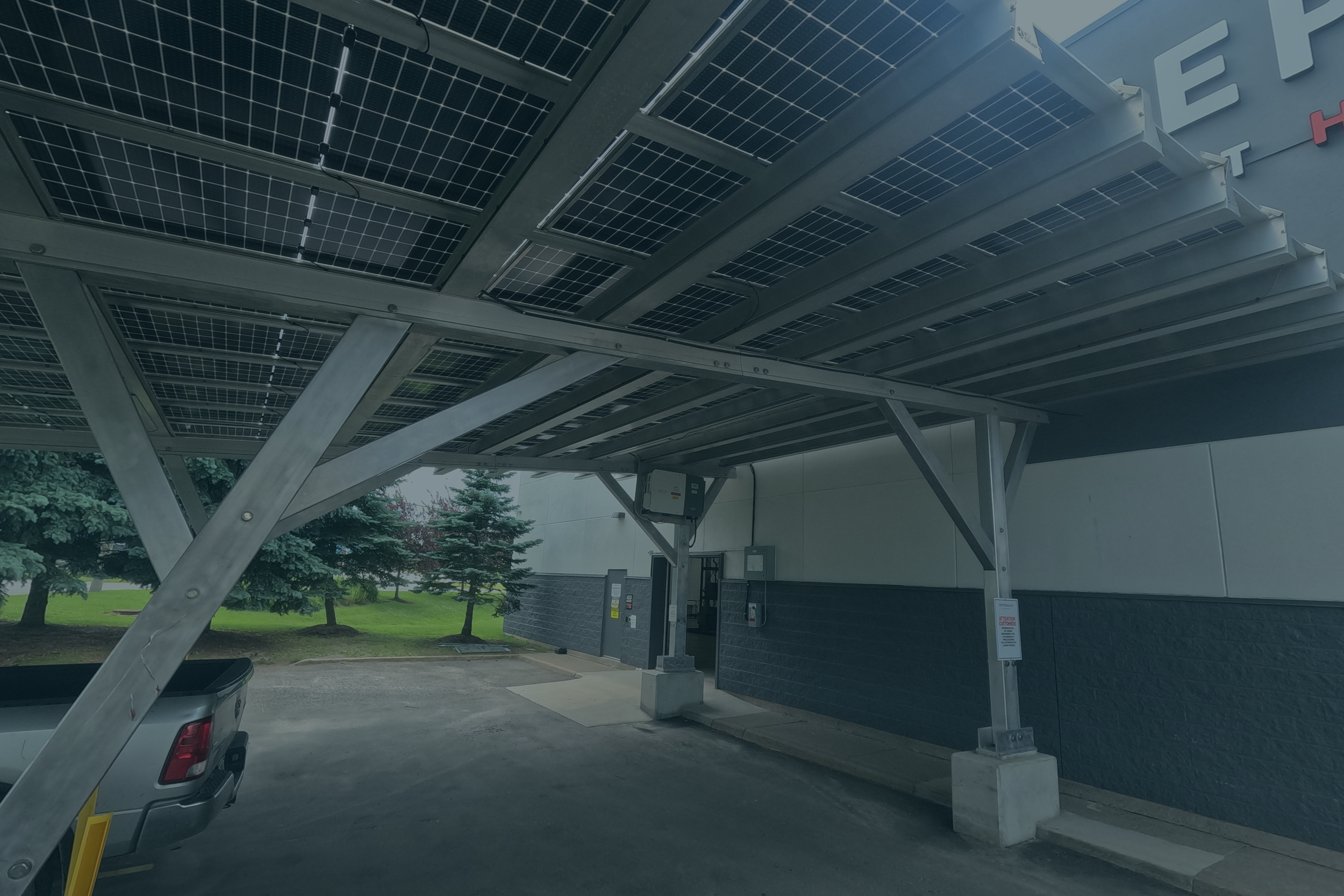
We combined our compact Hermes™ model with a custom three-column design, shaped the footprint around the setbacks that apply to accessory structures, and settled setback questions early in permit review. We designed the equipment in, not added it after: the string inverter is mounted beneath the canopy, and integrated lighting serves the pickup area below.
This project used precast foundations. Each one, roughly 12,000 to 14,000 lb, arrived cured and ready to set, cutting the pour-inspect-cure waiting that slows winter work. A boom truck worked inside the site and set each foundation precisely beside the building. We assembled larger frames flat and lifted them upright, while we framed shorter sections over the pickup area one member at a time.
Above it all, our patended water management system channels rain and meltwater to the canopy's edges, with no caulking and no gaskets. Customers loading a new sofa stay dry, and ice doesn't build up where people walk.
Click to enlarged
This is Heliostation Hermes™
Big coverage, small footprint.
Hermes™ is the most compact model in the Heliostation™ family. It's built for places where space is at a premium: single-row parking, customer pickup lanes, EV charging stations, pedestrian walkways, and curbside parking. Its cantilevered design reaches out over vehicles and people from a single line of foundations, maximizing cover and shade while leaving the ground below open.
Like every Heliostation™, Hermes™ is all aluminum, so it won't rust and needs no painting. Our patented water management system channels rain and meltwater to the edges with no caulking or gaskets. Cables run inside the structure, out of sight and out of the weather. We install panels from below, from the safety of a lift, and make footings EV-charger-ready from day one in case EV chargers are installed later. The system is UL 2703- and CSA-certified and made in Ontario.
At Tepperman's, we paired Hermes™ with a custom three-column design to fit the pickup area exactly. That's the point of a modular system: start from a proven model, then tailor it to the site.
Want to see the full Heliostation™ lineup? Explore our solar canopy models.
Specs are default standards and vary by site.
Net Metering System
Tepperman’s chose a net metering system. With net metering, the store uses the solar power it generates first. Any surplus flows to the grid and earns credits on the electricity bill, which can carry forward for up to 12 months.
In practice, those credits will be rare. At 49 kW, the canopy is small next to the demand of a full retail showroom, with its lighting, heating, cooling and displays. On almost any day, the store uses every kilowatt-hour the canopy produces the moment it’s generated, directly cutting what Tepperman’s buys from the grid.
So why net metering? It’s the safety net. On a holiday or a quiet day when the store draws less than the canopy produces, the surplus isn’t wasted; it’s banked for later. Load displacement, by contrast, is sized to use all of its power on-site and export nothing, which suits facilities with heavy, steady daytime loads. Net metering gives Tepperman’s the same on-site savings, with nothing left on the table.
Interested in learning more about Net Metering & Load Displacement? Read our Insights article here for a breakdown of the advantages of each system!
Class A vs Class B
Ontario splits electricity customers into two Global Adjustment (GA) billing classes:
Class A: Large users, generally those with average peak demand above 500 kW, who pay GA based on their share of usage during Ontario's five annual peak-demand hours. Cutting draw during those windows can substantially lower their costs.
Class B: Most other businesses, who pay GA based on total monthly consumption, with no peak-hour incentive.
As a Class B retail customer, Tepperman's costs depend on how much electricity the store uses, not when. That's part of why net metering, which maximizes total solar generation, was the right fit.
No Incentive Then. Up to 30% Now.
When this project was in development, it went ahead without a government incentive. But today, businesses in the same position have more support. The federal Clean Technology Investment Tax Credit (CT ITC) is a refundable credit of up to 30% of the capital cost of eligible clean technology, including solar generation equipment, for taxable Canadian corporations. To get the full 30% rate, the program requires meeting labor requirements covering prevailing wages and apprenticeships; otherwise, the rate is 20%.
No one can say how long it will last. The credit is scheduled to drop to 15% in 2034 and end after that, but its rules can change sooner. Ottawa is already consulting on domestic content requirements for its clean energy credits. For any business weighing solar, today's incentive isn’t guaranteed tomorrow.
Want to learn more about the Clean Technology Investment Tax Credit? Read our Insights article here to learn about eligibility, how it works, and how your business can benefit!
Shelter Today, Savings for Decades
Tepperman's St. Catharines shows that one structure can do two jobs: shelter customers as they load up, and generate clean power for the store. On a tight site with no laydown space and a roof reserved for significant utility work, our precast foundations, crane installation, and watertight Heliostation™ design delivered both. Tepperman's has turned its pickup lane into a long-term energy asset and a visible promise to every customer who pulls in, with a system built to last 30 years and more.
Interested in a complementary feasibility study?