
 Image 1 of 1
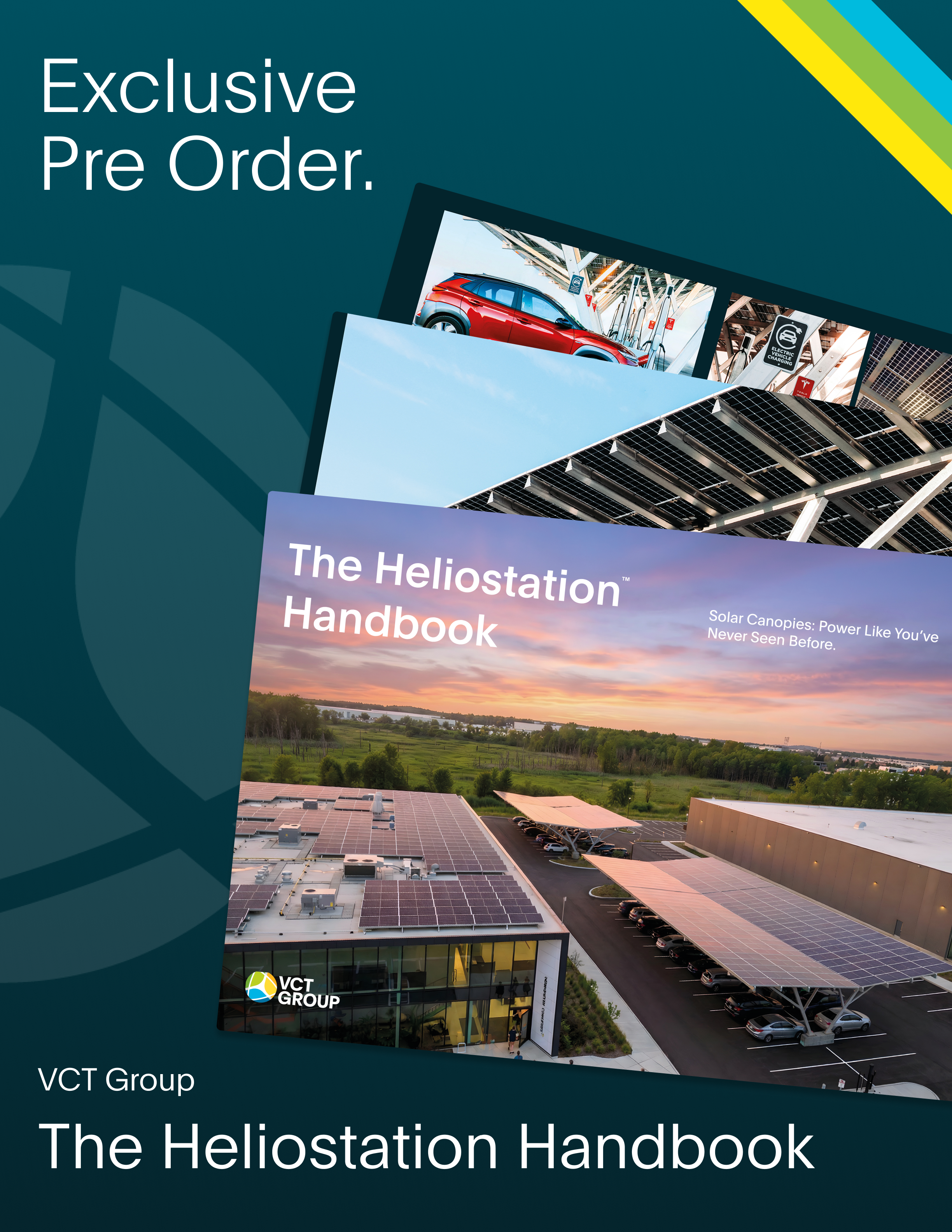
The Heliostation Handbook 2027 - Pre-Order
Product Description
The Heliostation Handbook is a premium handbook showcasing the intersection of architectural innovation and solar energy infrastructure. This hardcover reference book presents various landmark case studies, ranging from FIFA training facilities to commercial developments and Canada's first zero-carbon building, Evolve 1, demonstrating how VCT Group's Heliostation systems transform underutilized space into high-performing energy assets without compromising design excellence and helping developers reach sustainability goals such as LEED certifications.
About the Book
Designed for architects, engineers, sustainability consultants, and property owners, this handbook is both a technical reference and a source of design inspiration, proof that solar carports and canopies can be as visually compelling as they are functional.
Across nine key installations, readers will explore the full lifecycle of a Heliostation project: from early-stage design integration and site planning through to construction methodology and long-term energy performance. Each case study is presented with the depth and rigour that design professionals expect, covering:
Design Methodology: How VCT Group approaches each site with a design-first philosophy, tailoring structure, geometry, and materiality to complement the surrounding architecture and land use.
Patent-Pending Water Management System: A proprietary system engineered to handle drainage, runoff, water distribution, and ice management at the structural level — addressing one of the most overlooked challenges in large-format solar canopy design, especially in northern climates where factors such as ice management are vital for the safety of people and assets.
System Planning: Insight into site assessment, structural engineering, electrical integration, and the coordination required to deliver projects of this scale and complexity.
Construction Process: A behind-the-scenes look at how Heliostations are built efficiently and safely across a diverse range of site types, from open carparks to architecturally sensitive commercial precincts.
Why This Book Matters
Solar infrastructure is most effective and cost-efficient when considered at the earliest stages of a project. This portfolio makes the case for Heliostations as a standard consideration in any new development or retrofit, demonstrating their role in achieving:
LEED Certification: How early solar integration contributes meaningfully to energy, materials, and site credits.
Net Zero Building Targets: Real-world examples of how on-site renewable generation reduces a building's carbon footprint and operational energy costs.
Energy Asset Creation: Turning surface parking lots, loading canopies, and transitional structures into revenue-generating, grid-contributing infrastructure.
Featured Installations
Our case studies span a diverse range of project types and scales, including:
Evolve 1, Canada's first certified Zero Carbon building in Waterloo, Ontario
Cora Group Headquarters in Waterloo, Ontario
Pickering Casino in Pickering, Ontario
FIFA Training Centre in Etobicoke, Ontario
Teppermans in St. Catharines, Ontario
Caledon Yard in Caledon, Ontario
Angstrom Engineering in Cambridge, Ontario
Scarborough Arena Gardens in Scarborough, Ontario
And more, each representing a distinct design and engineering challenge that the Heliostation system solved.
Who This Book Is Meant For
This handbook is an essential resource for:
Architects exploring how to integrate solar infrastructure seamlessly into their design vision
Engineers evaluating structural systems, load considerations, and energy performance
Developers and Project Owners looking to maximize the value of underutilized land and meet sustainability mandates
Sustainability Consultants supporting LEED, Net Zero, and green building certification processes
Please email akoifman@vctgroup.com if you are experiencing issues placing your order.
Product Description
The Heliostation Handbook is a premium handbook showcasing the intersection of architectural innovation and solar energy infrastructure. This hardcover reference book presents various landmark case studies, ranging from FIFA training facilities to commercial developments and Canada's first zero-carbon building, Evolve 1, demonstrating how VCT Group's Heliostation systems transform underutilized space into high-performing energy assets without compromising design excellence and helping developers reach sustainability goals such as LEED certifications.
About the Book
Designed for architects, engineers, sustainability consultants, and property owners, this handbook is both a technical reference and a source of design inspiration, proof that solar carports and canopies can be as visually compelling as they are functional.
Across nine key installations, readers will explore the full lifecycle of a Heliostation project: from early-stage design integration and site planning through to construction methodology and long-term energy performance. Each case study is presented with the depth and rigour that design professionals expect, covering:
Design Methodology: How VCT Group approaches each site with a design-first philosophy, tailoring structure, geometry, and materiality to complement the surrounding architecture and land use.
Patent-Pending Water Management System: A proprietary system engineered to handle drainage, runoff, water distribution, and ice management at the structural level — addressing one of the most overlooked challenges in large-format solar canopy design, especially in northern climates where factors such as ice management are vital for the safety of people and assets.
System Planning: Insight into site assessment, structural engineering, electrical integration, and the coordination required to deliver projects of this scale and complexity.
Construction Process: A behind-the-scenes look at how Heliostations are built efficiently and safely across a diverse range of site types, from open carparks to architecturally sensitive commercial precincts.
Why This Book Matters
Solar infrastructure is most effective and cost-efficient when considered at the earliest stages of a project. This portfolio makes the case for Heliostations as a standard consideration in any new development or retrofit, demonstrating their role in achieving:
LEED Certification: How early solar integration contributes meaningfully to energy, materials, and site credits.
Net Zero Building Targets: Real-world examples of how on-site renewable generation reduces a building's carbon footprint and operational energy costs.
Energy Asset Creation: Turning surface parking lots, loading canopies, and transitional structures into revenue-generating, grid-contributing infrastructure.
Featured Installations
Our case studies span a diverse range of project types and scales, including:
Evolve 1, Canada's first certified Zero Carbon building in Waterloo, Ontario
Cora Group Headquarters in Waterloo, Ontario
Pickering Casino in Pickering, Ontario
FIFA Training Centre in Etobicoke, Ontario
Teppermans in St. Catharines, Ontario
Caledon Yard in Caledon, Ontario
Angstrom Engineering in Cambridge, Ontario
Scarborough Arena Gardens in Scarborough, Ontario
And more, each representing a distinct design and engineering challenge that the Heliostation system solved.
Who This Book Is Meant For
This handbook is an essential resource for:
Architects exploring how to integrate solar infrastructure seamlessly into their design vision
Engineers evaluating structural systems, load considerations, and energy performance
Developers and Project Owners looking to maximize the value of underutilized land and meet sustainability mandates
Sustainability Consultants supporting LEED, Net Zero, and green building certification processes
Please email akoifman@vctgroup.com if you are experiencing issues placing your order.